
The Fix Program Blog

Round ligament pain in pregnancy

Do pregnancy belts help with lower belly pain when pregnant? by Tabitha Webb

 

In pregnancy we experience a whole host of new sensations. Some are exciting – especially when your new baby starts to move around – but others can be uncomfortable or just plain confusing. One of these not-so-exciting sensations is called round ligament pain.

What might I feel?

Round ligament pain is felt low in the abdomen, just above the pubic bone and out to the left and right sides. You might notice it as you do big, abrupt movements such as changing direction, rolling over, twisting, coughing, sneezing, and getting in or out of a bed, a chair or your car. It is usually described by those who experience it as a sharp jabbing or pulling, and while it can affect both sides or only one it is most commonly felt on just the right side. It is a very normal part of a healthy pregnancy and is mostly likely to be felt in the second trimester.

What are my round ligaments and why do they hurt?

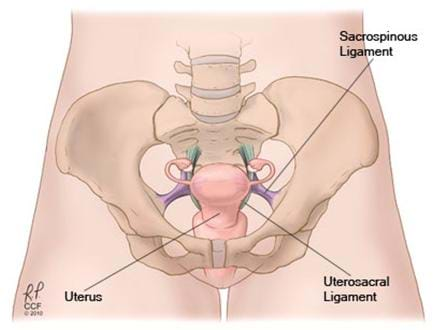
Every woman has many ligaments that sustain the uterus in its usual forward tilt. The two round ligaments start from the top and front of the uterus (one on the left side and one from the right), and run forward and inward towards the groin where they attach to the pubic bones.

During pregnancy, as the baby grows larger and the uterus has to expand, these ligaments come under much more pressure and must elongate. At the same time they also start to bear a lot more weight than usual of your growing uterus, baby and placenta. Also, while the pregnancy hormone relaxin helps all the ligaments in your body become more flexible, the round ligaments become very flexible and can stretch too far, too easily. Because of these factors, sudden quick movements that pull on these ligaments can create short, sharp, and jabbing pains. The discomfort usually only lasts for a couple of seconds before disappearing.
Should I be concerned?

As expecting mothers, we can often worry about abdominal pains, and you should definitely have them checked by our doctors to rule out anything serious if you are concerned. But if the round ligaments are found to be the root cause of the pain, it can be reassuring to know that this is a normal and healthy experience and not a sign of anything being wrong in the pregnancy.

What can be done to help?

Here are some easy tips to alleviate the jabbing pains of your round ligaments.

  • Be mindful to move more slowly and gently while you are pregnant and to gently engage your pelvic floor and deep abdominal muscles during big movements like rolling over, changing direction and coughing or sneezing. Ask us to show you how!
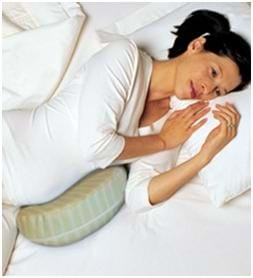
  • When lying on your side try propping up your bump from underneath with a small cushion or rolled up towel between it and the bed or yoga mat to prevent it hanging down and dragging on the ligament. See the picture below for an example.
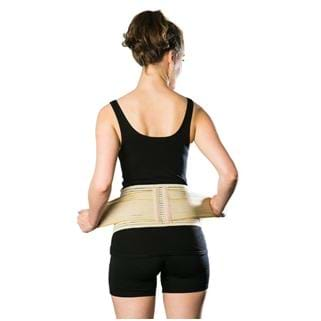
  • Ask your physiotherapist whether a pregnancy belly and lumbar support belt might be helpful for you. These gently support and stabilise your bump and lower back and reduce excessive, sudden stretch on the round ligaments and therefore can reduce the associated pain. We have some great ones in stock currently which are helping some of our ladies right now.

  • It can help to do some safe and gentle pregnancy-specific Pilates exercises under the direction of a physiotherapist. This will help to keep your deep abdominal, pelvic floor, and buttock muscles supporting you as well as possible. Working with your physiotherapist to practice the most supportive postures and ways to move and exercise can also help. We cater to this specifically in our prenatal pilates classes, and individual sessions and physiotherapy consults are always available

So don’t suffer through the pain in silence – talk to your doctor or any of the staff at The Fix Program about how to prevent and manage round ligament pain, and look after and support your round ligaments as they look after and support your growing bub, for a more comfortable and pleasant pregnancy.

Join an online class  from the comfort of your home - Katrina the principle physio at The Fix Program has designed a series of pregnancy exercise programs that will help you immensely. 


1 Dec 2016 BY Katrina Tarrant POSTED IN Exercise , Pilates , Women's Health

The overactive pelvic floor

When strengthening the pelvic floor is NOT the right thing to do.

by Heba Shaheed

 Overactive pelvic floor

For many women (and men), pelvic floor exercises are a really important part of the health and fitness picture. They are helpful in women with weakness in their core related to pregnancy, birth, lower back injury or simply weakness due to poor posture and sedentary lifestyles.

 The muscles in your trunk commonly called the “core” function as a unit. The pelvic floor muscles are one important part of the “core” along with the

  • diaphragm (breathing muscle),
  • transversus abdominis (deep abdominal muscles) and
  • multifidus (deep back muscles).

If one of these four muscles does not recruit optimally, it can affect the integrity of the whole core or postural system. 

Pilates and physio-led core strengthening exercise classes are a great place to work on your core and pelvic floor muscles. Ensuring that you accurately time the recruitment of your core muscles and coordinate them efficiently will give you the greatest gains from these classes.

How does it all coordinate together? 

Exercises should be broken down into two movement components for each phase of breathing, with one part of the movement timed with an inhale and the alternate movement timed with an exhale. For example, when doing bicep curls, the bending of the elbows can be done on an exhale and the straightening of the elbows can be done on an inhale.

You can easily remember this with “exhale with the effort”.

In this way, the diaphragm can be recruited optimally and 3-dimensionally for each movement component. The rest of the core system then needs to be coordinated with the recruitment of the diaphragm. As you inhale and the diaphragm expands outwards and downwards, the pelvic floor relaxes downwards simultaneously. As you exhale, and the diaphragm relaxes inwards and upwards, the pelvic floor also draws upwards (and the transversus abdominis tightens inwards).

Therefore, this is the movement pattern that needs to be encouraged during Pilates and exercises classes. Every time you inhale, your diaphragm should expand outwards and downwards and the pelvic floor muscles should relax down; and every time you exhale, the diaphragm should relax inwards and upwards and the pelvic floor muscles should squeeze and lift up.

In which people should pelvic floor activation be discouraged? Isn’t pelvic floor strength great for everyone to prevent incontinence and other issues?

In some people, these pelvic floor muscles can actually get “tight” or “stuck in spasm” and stay upwards- you could say they are too tight or strong. In these people, pelvic floor muscles can fail to relax downwards. In physio terms, we call this an overactive pelvic floor or a hypertonic pelvic floor. Signs that your pelvic floor might be overactive include symptoms such as

  • painful sex,
  • bladder urgency,
  • chronic constipation,
  • persistent period pain,
  • coccyx pain, or
  • simply a sensation that you are unable to relax your pelvic floor muscles down. 

For people who have overactive pelvic floor muscles, trying to recruit the pelvic floor during Pilates, running or exercise classes can cause these muscles to get even tighter and more dysfunctional. The symptoms listed above can in fact worsen.

Instead, these people should focus more on

  • the recruitment of their diaphragm, trying to encourage deeper and wider breaths in,
  • visualising the dropping or relaxation of their pelvic floor muscles as they inhale. Imagery such as visualising the way a pebble drops into a pond and the ripples it makes outwards can help people to learn to let go of these muscles,
  • the relaxation of their pelvic floor even within exhale,
  • the Pilates or exercise movement happening with the exhale but without actively contracting or lifting through their pelvic floor muscles,
  • activating their transversus abdominis muscle by gently drawing in their lower abdomen towards their spine, as they exhale.

To make it simple, the bulk of the exercise should be more of a focus on the diaphragmatic breathing. The greater stretch in the diaphragm, the more the pelvic floor muscles are able to relax downwards.

Are you worried that this could be you?

There is no need to be alarmed if you are currently exercising your pelvic floor in Pilates. If you have any of the symptoms of an overactive pelvic floor, the best thing to do would be to assessed by a women’s health or men’s health physiotherapist. Your pelvic floor physio would be able to measure your resting muscle contraction pressures and activated pressures vaginally or rectally to determine if your pelvic floor is not able to relax. There are treatments that follow all around improving your brain’s awareness and ability to relax, or to even massage and trigger point the tension away (Yes! You can do this in the pelvic floor muscles from inside the vagina!). Prescribing the right sort of exercise or even continuing with your regular exercise is usually possible, but with a different mindset when thinking about how you hold your pelvic floor muscles, better breathing techniques, trying not to breath hold or abdominal brace.

For those of you without any of the above signs, it is still great practice to “let go” and be aware of your relaxing pelvic floor as you inhale or after your set of biceps curls or squats. What goes up (your pelvic floor when activated) must come down (your awareness and ability to relax and let it go).

At The Fix Program we have women’s health physiotherapist that can treat you. Please contact us anytime.


29 Nov 2016 BY Katrina Tarrant POSTED IN Exercise , Pilates , Pregnancy , Sydney CBD

Draft January 2017 'summer school' timetable

Draft ‘summer school 2017’ timetable is subject to change. This timetable is for our all of existing Pilates clients. These classes will run for 3 WEEKS ONLY in our CBD clinic for those of you who are back to work after Christmas indulgence!

These classes commence in the weeks of Monday 9th, 16th and 23rd January.

Classes are recommended and scheduled for:

Our full term 1 classes start in the following week, from Monday 30th January for all levels.


Fix News