
The Fix Program Blog

22 Oct 2015 BY Heba Shaheed POSTED IN Pregnancy , Women's Health

What is normal after having a baby? Part 2

Heba talks about the stuff they don’t tell you about being a new mum

Last month, we talked about what is normal and common after having a baby. We discussed post-partum vaginal bleeding and discharge, abdominal separation, lactation and the baby blues. This month we’re going to have a look at what is common after birth, but not normal.

Prolapse

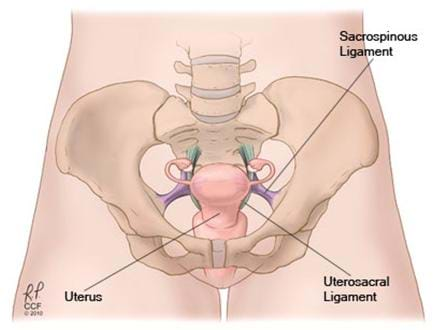
Prolapse is surprisingly common post-birth affecting about 50% of women. During pregnancy, the extra hormones make the connective tissue in women’s bodies more lax to allow for childbirth. In some women during birth, this connective tissue overstretches and doesn’t really tighten back up after birth. This means that the pelvic organs being held up by this connective tissue are sitting lower than they should be. If they have a forceps or vacuum delivery, their risk of prolapse goes up even more.

Women will experience symptoms like:

  • Lower back pain. This is because the uterus attaches to the lower back via ligaments and if the uterus is sitting lower there is more pull up onto the lower back from within.
  • Pelvic pressure or feelings of heaviness or dragging sensations
  • Sensation of a bulge vaginally
  • Leaking from the bladder. This is because the bladder and urethra are sitting lower than they should be.
  • Incomplete emptying of the bladder. This is because the bladder sits lower than it should, a little pocket of the bladder can form and store urine

The best way to manage and sometimes even cure prolapse is to see a women’s health physiotherapist 4-6 weeks after birth. She will fit you with a device to lift the prolapse called a pessary. The pessary cystocelewill prevent any sensation of prolapse and sometimes even allow the connective tissue to tighten up completely within a year post-birth.

Incontinence

Incontinence is really common post-birth affecting at least 30% of women. Usually the incontinence is a direct result of a prolapse. Sometimes it is because of a weakness of the pelvic floor muscles. 1 in 3 women will have bladder control issues post-birth and 1 in 8 women will have bowel control issues post-birth, especially if she has had an anal sphincter injury or 3rd/4th degree perineal tearing during her labour.

Women may leak with a cough, sneeze, laugh, jump or run and this is known as stress incontinence. Or they may leak due to urgency, which is known as urge incontinence; sometimes they can have both. The great thing is physiotherapy can cure 80% of cases, and it can be as simple as doing your pelvic floor strengthening exercises.

A great set of exercises to get started with are doing 10 second holds, followed by 10 quick lifts, followed by 3 elevator exercises. The elevator exercise is visualising the pelvic floor as an elevator in a 3-storey building, and taking the pelvic floor to level 1, then level 2 then level 3, and then letting it drop back down to ground. If a woman does this every time she feeds her baby, she can keep her pelvic floor muscles strong.

It is a good idea to stop to ask yourself at your bub’s 3 month ‘birthday’ the following question. “Have I felt that my bladder control has improved and is returning to normal since the birth?” If you have any concerns answering this favourably, seek assessment and advice from your women’s health physiotherapist. She may wish to assess your strength, coordination and any presence of prolapse with an internal vaginal examination. You may need extra training and help to regain your strength or the pelvic floor region and to regain good bladder and bowel function and control. Perhaps you may need a pessary fitted and prescribed to help you along? This examination is the only way to truly see how well you are going with your pelvic floor muscle function after having your baby. We do hope that after the birth, our internal exams wouldn’t worry you at all!

Pain

Having a baby is often compared to major surgery. And if you have a caesarean section, then it definitely is! Most women will have some amount of scar tissue after birth, whether it is vaginal scar tissue from an episiotomy or perineal tearing, or scar tissue from a c-section. And scar tissue, when it’s not numb, can be quite sore.

This is why women can sometimes experience pain when sitting or when getting out of bed, while emptying their bladder and bowel, or even during sex. It’s as common as 1 in 5 women. On top of that, the drop in oestrogen makes the vaginal area dry and more likely to be painful especially during sex. If you do have scar tissue, it’s very important to do scar tissue massage along the entire length of the scar. Rub your finger perpendicular to the scar and spend 5 minutes every day rubbing into it to smooth out the tissue.

In some women the pelvic floor muscles go into spasm from the tearing, scar tissue and pain down there. These women may need to see a women’s health physiotherapist for pelvic floor release work. These women often won’t tolerate doing pelvic floor lifts, and can sometimes experience more pain from these types of exercises.

Be kind to yourself   

So remember, prolapse, incontinence and pain are common post-birth, but they are not normal. And you can certainly do something about them and sometimes cure them altogether with early visit to your women’s health physiotherapist.

29 Sept 2015 BY Katrina Tarrant POSTED IN Exercise , Physiotherapy

The do’s and dont's of using weights

Resistance and weight training

Strength or resistance training has many reported benefits, but just picking up any old set of dumbbells or barbells could do you harm. Inappropriate weight, poor postures while exercising and dodgy techniques can all mean possible injury. Throwing your body around, grunting and thrashing about in front of the gym mirrors is not the way it’s done!

Weight training uses resistance to build the strength and endurance of muscle. Doing weights repeatedly and consistently, your muscles become stronger. Some of this is due initially to a phenomenon called ‘neural adaptation’. This is felt as an initial noticeable gain in strength, and is attributed to the nerves firing more messages to the strengthening muscles, making it contract harder and stronger. After this initial adaptation, there is a plateau we feel in our strength gains. Keeping the muscles guessing with a broad range of exercises and movements will get you that extra strength. This is when the muscle fibres actually start to thicken or ‘bulk up’.

To put this into perspective, a muscle fibre within any of your muscles are as thin as a human hair. The cells of these fibres are what thicken in response to resistance training. It is also thought that we are born with a finite number of muscle fibres, so weight training cannot stimulate your muscles to grow more. It is only this thickening (or hypertrophy) of the muscle fibre cells that make us look bulkier in our muscles.

The basic principles of weight training

There is so much out there in the literature to read about training programs. However, here are a few of the basics for the novice when it comes to weight training. All principles below must be considered for a safe and effective program.

  • The weight. How heavy a weight should I use? Should I use free weights, fixed weights, my body weight, resistance bands, or kettle bells?
  • The exercise or movement. Do I move my body in a small movement? Large movement? In what position should I exercise? How do I incorporate the effects of gravity?
  • The repetitions. Do I attempt sets of 3-5 repetitions, or 10-15? How fast or slow do I move?
  • The sets. So do I just attempt one set, or 3? Do I do them all at once, or in between other exercises?
  • The rest and recovery. How soon can I go back to the gym and attempt these same exercises again? Can I exercise when I still feel sore and tired form my last workout?
  • The variety. How do I fend off boredom at the gym with my weights sessions? Or get that muscle bulking up and keep it guessing?
  • The progressive overload principal. So how do I safely progress my weights without injuring myself? These weights seem easy, so by how much can I step up the resistance?

How heavy should I make my weights?

In resistance training, the term Repetitive Maximum (RM) is used to work out the right weight for an individual. RM is the maximum number of repetitions that can be completed with a given resistance or weight before the muscle fatigues. To gain strength, the muscle needs to reach fatigue for the changes to take place in the nerves and the muscle fibres.

It is the RM range that determines what type of improvements the muscles will make. The optimal range for improving muscle strength is 8–12 RM for a beginner and 2–6 RM for the more advanced. So using the beginners RM of 8 as an example for a biceps curl, this is the weight that this individual can curl the given weight 8 times, but feels that the last few reps are really getting difficult. Not impossible, but with a little strain, effort, quiver or ‘burn’. Strive for 3 sets with a rest in between. Stretch or move to another muscle group for your ‘rest’.

It is often a good idea to seek help with this weight prescription. If you can imagine the numbers of muscle groups to set the right weight for, there is quite a bit involved to get it right. Too heavy and you risk injury. Too light and you will not get the training benefits.

As you become stronger, you will notice that the 8RM weight starts to feel too easy. It is time to work out how to progress. You can either increase the reps to 12-15 with that same weight, or add an extra set. Or find your new 8RM, which will be a slightly heavier weight to feel that fatigue in your last repetitions once again.

How should I move with the weighted exercise?

Here are a few tips with respect to movement.

  • Move through the greatest range or arc of movement you can. The muscle will improve its contraction strength at all angles this way.
  • Move slowly in each direction. Try counting to 3 as you flex and also as you extend. Your muscle will gain strength as it shortens (concentric contraction) and lengthens (eccentric or braking contraction). You need strength in both types of contraction in everyday life. For example, walking down steps, your thigh muscles eccentrically slow you down and this is hard work! As you walk up steps they concentrically contact to pull you up the stairs. Again, hard but different work.
  • Think of your movement as a team effort. There are many muscles working to stabilise the region, hold your posture. There are even more than just the one muscle working to flex and extend the arm or leg.
  • Be very aware of your trunk and pelvic postures. Remember safety first! Protect your neck and lower back as you exercise. ‘Melt your shoulders from your ears’ and into your ‘shoulder blade pockets’, be aware of your ‘pelvic bowl of water’, and ‘lengthen gently through the back of your neck’ to the base of your skull. Again, advice from your exercise physiotherapist can give postural awareness cues right for you and your posture as you weight train.
  • Breathe. Don’t forget to continue with breathing and avoid holding your breath under the effort, or when distracted. Your diaphragm not only breathes the best for you, but is also an important part of your trunk stability and support (or ‘core muscle’). Breathing ‘deep and wide’ as you move with your weights will therefore deliver the oxygen you need, help support your posture, makes sure the pressures on your abdomen and pelvic floor muscles is more controlled, and prevents you looking like a beetroot!

My wrists and elbows hurt

The way in which you hold the dumbbells or barbells can increase your risk of injury around your lower arm and hands. Tendonitis of the forearm or wrist muscles can occur with too much loading or stress through the region. Big heavy upper body weights are probably OK for your shoulders and upper back, but these weights would be too much for your lower arms to bear. Keep safe here and not put yourself out of weight training due to a pesky tendonitis injury. They are often hard to settle and will only bring about frustration.

  • Grip your weights lightly. Hold your weights enough to feel secure, but don’t squeeze the life out of them. This only overloads the forearm muscles.
  • Once you have your light grip around the weight, imagine you have a brace or splint immobilising your wrists. Lock them into place and prevent the hands and wrists from deviating side to side throughout your larger movements. As a guide, the position of your wrist and hands when typing or playing the piano is the safest posture in this area. Can you keep your hands in this position while holding the weight?
  • In some instances, it is actually wise to wear a small wrist brace or splint. You have probably seen some at the gym wearing supports for the wrist and hands. This would be particularly helpful with higher weights in advanced weight users.

How can I keep my muscles guessing?

So you’ve got the bug and can start to see and feel you are stronger. Perhaps you are passed that now and for your efforts, you can’t feel as much gain. Don’t feel disheartened; just mix it up a bit. Still staying safe with all of the tips above, why not consider:

  • Moving from fixed “Nautilus’ weights to free weights? You will work harder here on your team of muscles involved.
  • Moving from weights to body weighted exercise?
  • Change your apparatus – move from weights to bands or to ropes?
  • Change the postures in which you do your exercises? Try sitting, lying or even kneeling on a swissball. Move from sitting to standing, or sitting to lying
  • Varying your exercise? Add a cross training activity such as swimming with hand paddles for upper body conditioning, yoga for that amazing strengthening effects from flowing from one posture to the next as seen with Ashtanga styles or ‘power yoga’.

This variation will keep your body and muscles guessing, move you in different ways and prevent that boredom of repetitive unidirectional movements.

There is so much to weight training, but this will give you a great start. Feel free to ask your Fix Program physios about the right sort of weights use for you. And if you’re at all worried about your postures when at the gym, wrists hurting or how to employ good technique, ask us!

Perhaps you could spread the word when you see those fast moving, breath holding, poor postured, red faced gym goers at your local gym!


26 Sept 2015 BY Katrina Tarrant POSTED IN Pregnancy , Women's Health

Pregnancy and swelling

Do you feel like your legs are as thick as tree trunks?

By Nicky Davies, Massage therapist form TREWellness Centre, Cremorne

You may be pregnant, trying to get pregnant or had your baby. It doesn’t matter which boat you’re in, no doubt you’ve heard lots of stories about “what to expect when you’re pregnant”. Every pregnancy differs from person to person and baby to baby, however some symptoms are quiet common.

One of these is puffy legs, ankles and hands (which can lead to carpel tunnel syndrome.) This is one of the conditions that we aim to relive or elevate with pregnancy massage.

Hormones, namely progesterone and oestrogen, have a huge role to play during pregnancy which is to primarily prepare your body for the main event. Unfortunately these hormones also cause some unwanted effects, such as pregnancy related swelling. Swelling (or oedema) is an increase of fluid in the body. This can often be up to 40% in the third trimester of your body’s usual fluid levels. No wonder it gets stores in the legs and we are left feeling puffy and without shapely wrists or ankles! Progesterone causes the smooth muscle to relax which impacts on the body’s ability move or pump the oedema away. This oedema often pools in the ankles, calves hands and wrists.

Even Kim Kardashian can’t escape pregnancy related ankle swelling!

Pregnancy massage to these areas consists of long gentle pumping strokes to help flush out the congested areas, a bit like a lymphatic massage. This helps to reduce the discomfort on the surrounding soft tissues and improve mobility of the ankle joint. This has, with some clients, provided relief with restless leg type complaints due to the improved circulation.

For more information of the benefits of pregnancy massage take a look at TRE Wellness Centres website: www.trewellness.com

TRE Wellness Centre was evolved with a very clear goal in mind, which we believe makes us that little bit different.

Nicky Davies

Nicky has been in the allied health industry for over 12 years, with a passion for helping people of all ages and backgrounds to achieve their health goals. Nicky has a BSc in Sports Therapy from the UK, Pregnancy massage Certificate, Post Graduate certificate in Vocational Education as well as qualifications in Personal Training and Nutrition. As well as practicing, Nicky is also an educator of health and remedial therapies.


Fix News