
The Fix Program Blog

31 May 2013 BY Katrina Tarrant POSTED IN Pilates

Can Pilates help with Knee Pain?

Common causes of knee pain

Knee pain is very common. In this short piece I will talk about a few most common causes. Next month we will discuss how Pilates and improving your pelvic stability can help.

Knee joint line pain

Due to ‘poor design’ of the angles of the femur (thigh bone) and the way our muscles work in the leg, weight passing through the knee joint is usually uneven, with more through the medial (inside) side. With the natural effects of aging, or with deconditioning of our leg muscles, this can cause more wear and tear in this part of the knee and joint irritation (see osteoarthritis). If there is minimal arthritic changes to the knee cartilage that lines and cushions the joint, then this type of pain can easily be rectified with re-alignment of the knee. This occurs with an exercise program to stretch tight inside muscles and strengthen the hip and thigh muscles. Footwear adaptations and orthotics can help here too.

Osteoarthritis

Osteoarthritis is a very normal adaptation of a joint to aging. Unfortunately however, it can be quite painful and debilitating. Knees, hips and lower spines, our big weight-bearing ‘busy’ joints tend to suffer most. Cartilage which lines each bony surface in our joints becomes brittle, with decreasing collagen as we get older. With constant movement and weight passing through the joint, this cartilage can start to erode, taking away the joint’s protective lining. In response to this, the bone cells in the immediate area begin to proliferate or multiply, causing uneven and rough joint surfaces and bone ‘spurring’. This is very common in the knee, particularly the inside of the joint (see knee joint line pain). Treatment here again will focus on an exercise program for the hip and knee to strengthen the muscular support for the joint. If really bad and quality of life comes into question, a partial or total knee replacement can be done by your friendly orthopaedic surgeon. This is followed by lots of the same exercises for rehabilitation after (with your friendly physiotherapist)!

Patello-femoral tracking problems

The knee cap or patella floats about on the front of your knee joint and is a major cause of knee pain. It does so through falling into poor alignment due to muscular imbalance in those muscles attaching onto it. This usually happens insidiously, or gradually. Typically, muscles to the inside of the patella are weak and the ones to the outside too strong, pulling the knee cap off centre. This creates much pain, noise and sometimes swelling under and around the knee cap. There are other factors typically involved too, such as weak hip muscles and/or poor mechanics at the foot and ankle such as over-pronation (flat feet). Fixing all of these factors are necessary again here with a big emphasis on strengthening exercises to re-align the patella back to its happy place. Sports taping and braces can help early on to assist facilitation of the correct muscular activations.

Meniscal tears

Menisci are the disc like structures inside the knee that give this hard working joint more shock absorption. There are 2 in your knee – a medial and lateral meniscus. These types of injuries are typically thought of as a sportsman’s injury with twisting and falling – football, soccer, skiing, basketball. However menisci can become torn gradually over time due to poor joint alignment or mechanics (see knee joint line pain). Pain felt with these injuries can be quite short, sharp and irritating, and often sporadic with absolutely no pain between episodes. The knee can sometimes ‘lock’ or feel stuck. Management of meniscal tears is usually key hole (arthroscopic) surgery to trim and vacuum out the flapping piece (much like a trimming a finger nail). Recovery is fast and outcomes good.

Ligament strains

Under this heading fall the big ones, again often associated with the sportsmen and women, and of course, the ski season! Cruciate ligament tears, medial ligament tears. These are very dramatic, with instantaneous pain and swelling. They occur when the knee goes one way (with the foot usually fixed firmly on the ground) while the weight of your body goes the other. After consultation with your friendly physiotherapist or orthopaedic surgeon, and with consideration of your desire to return to sport, surgery is typically the only option. Some will forego the surgery to reconstruct the knee and also therefore forego the ability to return to sport. The knee may feel OK for walking, but would not like a sudden change of direction. This is due to the knee’s instability with usually 2 of the 4 ligaments holding the joint gone. After a total knee reconstruction, there is a very long and difficult rehabilitation process for regaining movement, balance and muscular strength about the knee and hip.

As a masseur friend recently said to me, the knee is the poor child left in the middle of its parents’ messy divorce. I couldn’t agree more. By this she meant that the knee cops a lot of wear and tear and unfavourable biomechanical stresses from an unstable or weak hip/pelvic region above and poor foot mechanics below (such as over-pronation, stiff foot and ankle joints).

Pilates, core stability and hip stability exercise such as at The Fix Program can build the strength and stability at the knee to better support its structures. Manual therapy and a podiatrist visit for orthotics may also be treatment options alongside your exercises to optimise the mechanics of the knee.

Next month we will talk about the top 5 exercises for knees and knee pain.

29 May 2013 BY Katrina Tarrant POSTED IN Back Pain

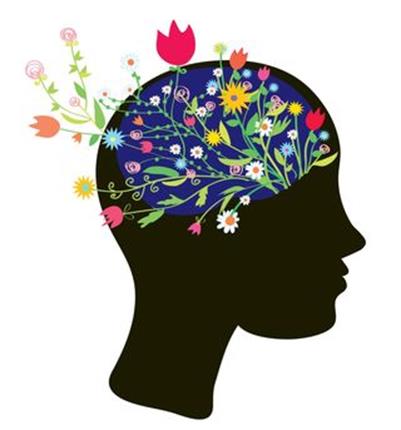
Exploring Pain: The Virtual Body

Phantom Pain 

Have you ever really thought about phantom limb pain? Perhaps you have not even heard of it? It is defined as pain that is still felt even without the existence of that body part, such as after amputation. Seventy percent of all people who lose a limb experience phantom pain.


How can pain exist in a part of the body that does not? This is quite a thing to get your head around!

In the past months as we have looked more at the brain and its critical role in the pain experience for all humans. Perhaps from your readings, you may have an idea of how phantom limb pain can exist?

As we are discovering, the pain response in us all comes from the brain’s split-second decision in deciding whether you are in pain or not- and then to act. On weighing up all information at that exact moment of time, for that individual for that experience, the brain can decide this. You may remember that this information comes from multiple sources – sensory input from the body tissues, memory and mood centres and can depend on your gender, age, and beliefs about pain, etc etc.

So how does this relate to phantom limb pain?

Phantom limb pain can become worse when the person is stressed or anxious. It can be worse when another person comes too near to where the body part once existed. People can still feel rings on fingers that have been lost to an accident. And others report feeling that a leg missing still feels like it is there and carries on walking!

This can all be explained by the existence of the ‘virtual body’- maps in the brain’s hardware (nerves) that represent the real physical body. The virtual body allows for us to know where our bodies are in space – the feeling, the movement and the ‘muscle memory’ of our body. If you close your eyes and imaging turning on a tap, you can remember, visualise and almost feel yourself doing it. You can still do this because your brain uses the virtual body to know where the physical body is. (This is like the ‘brain movies’ we have discussed in earlier months).

With phantom limbs, although the physical limb has been lost, the virtual representation of it still exists in the brain. This is why the limb is still felt as if it were still there and attached.

So how does this illustration of phantom limb pain help us in understanding affect the way we experience pain?

The science and explanations behind phantom limb pain have allowed a clearer understanding of the virtual representation of the real body. We know that the brain is forever adapting and that this can be seen in the virtual body maps too. The virtual body can alter and does so to stimulus. If you have pain in your toe that lingers for days or weeks, the virtual representation or map of the toe in your brain enlarges. It’s like your brain has opened up the flood gates for all information to flood from the toe- like an over-sensitivity. This can make the pain experience of your toe ‘switch on’ very easily.

The good news is that these changes to the virtual body can be reversed too. Maps representing your toe in the brain (as in the above example) can be made smaller as the toe gets better, stronger with normal movement returning. The flood gates can close and the heightened awareness of sensation and pain of your toe disappear.

More on this later…


29 May 2013 BY Katrina Tarrant POSTED IN Back Pain , Exercise

Top 5 exercises to beat back pain at your desk

Tabitha shares her top tips on exercising at your desk without getting off your bum

Working in an office chair can cause all sorts of pains – or irritate existing ones. You may find that your lower back becomes stiffer, sorer and more tired as the day progresses, and opportunities to move about are hard to find. Instead of enduring the pain or abandoning your post, try these gentle, easy and fast exercises – each of them targets lower back pain, and all can be done without leaving your chair!

Active Sitting

Place your feet flat on the ground, hip width apart, with your knees and hips bent at 90 degrees (adjust your chair height if necessary).

Rock your pelvis forwards and backwards to find where your pelvis becomes level – check that you have a small curve in your lower back and that you’re sitting up on your sit bones.

Grow tall from there, gently drawing the shoulders back and down a fraction and imagine you’re holding a mango between your chin and your chest.

Hold that posture for 30 seconds, adding 30s each subsequent day to wake up your core postural muscles which support your spine. Try linking it to an activity you have to do regularly, like answering emails!

Seated slow march

Set yourself up in the active sitting posture (see above). Take a deep, wide breath in to prepare. As you breathe out, lift your pelvic floor, deepen your naval to your spine and maintain that posture as you slowly lift one leg up just enough to lift your knee from the seat. Do not rock your pelvis!

Hold there for a deep, wide breath in. As you breathe out, lift your pelvic floor, deepen your navel to your spine and lower your foot (in a controlled way) to the ground.

Do the same on the other side and repeat for a total of four on each leg. The exercise will challenge your core muscles so that they continue to support your back throughout the work day.

Hug knees

Push your chair away from your desk and lean right forward over your legs, hugging around your knees. Hold this stretch for 30 seconds and then come back up gradually. You should feel a gentle stretch in your lower back.

Reverse the car

Set yourself up in the active sitting posture (see above). Place your right hand on your left knee, and reach your left arm around to hold the back of the chair, turning through your spine as if you’re reversing your car.

Stay there for 20 seconds, growing tall through the spine and breathing deep and wide. Repeat on the other side. You may feel this stretch in your back, chest or shoulders.

Buttock Stretch

Set yourself up in the active sitting posture (see above). Rest your right foot on top of your left knee. Push the right knee down gently with your right hand as you lean forward through your trunk. Hold for 30 seconds then repeat on the left. You should feel this stretch in your buttock muscles.

You can do these in any combination, and try out what works best for you. When you activate your core muscles like this then you will relieve pain both now and in the future!


Fix News