
The Fix Program Blog

4 Apr 2013 BY Katrina Tarrant POSTED IN Pilates

Pilates and Imagery

Heba explores The Franklin Method

In the Fix classes we often include imagery in our exercises to help us achieve better posture. When I say ‘imagine the string at the top of your head pulling you up, lengthening you through your spine’, you automatically feel yourself growing taller. When I call on you to imagine or visualise ‘your pelvis as a deep salad bowl filled with water and tipping the bowl forwards and backwards’, you are using your mind to form images to help bring different parts of your body into more neutral alignments. This helps your brain to connect its nerve pathways better, so the new alignment or movement comes freely.

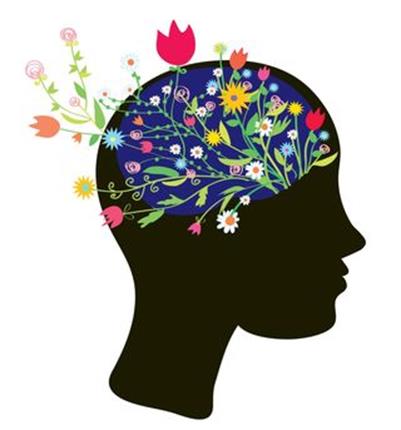
Imagery and the mind-body connection is one of the principles in The Franklin Method. The Franklin Method teaches us how to use our minds to control our body’s movements. It works on the principle that movement starts in the brain. So if you want to change your body, you need to change your mind first. The images and words you form in your mind will influence the way your body moves and exercises.

For instance, if you have negative feelings or images of doing an exercise such as the abdominal curl or sit up – for it brings on your neck pain or tightness or it’s too hard- then even before you have started the exercise, you have set yourself up for poor form. You may lift shoulders towards your ears and create tension and stress in that area. However, if you take a few moments to prepare the exercise in your mind with positive imagery, you can achieve great results without stressing your body. Next time you attempt sit ups, try visualising the exercise in your mind without pain or tightness. Imagine soft shoulders melting away from your ears like ice cream, or imagine a buoyant balloon lifting and supporting the base of your skull as if it is weightless.

The Franklin Balls

Have you ever used a tennis ball to help massage out your aches and pains? The Franklin Method is all about this- using balls and imagery to roll and release away tension. Franklin Balls and the Franklin Mini Roll, mouldable plastic filled with air, are soft and efficient in releasing muscle tension. Did you know that if you apply imagery exercises with the Franklin Balls can help release out tensions in your muscles more easily?

There are many different imagery exercises that work well with the ball exercises. Here are a few that you can practice at home for your tension areas. Try with a tennis ball. Choose the one that works best for you.

  • Place the ball under a tension spot. Focus your mind on the centre of that spot and imagine the area spreading out like rays of sunshine or imagine the area unravelling like a ball of wool.
  • Use your breathing to help relieve the tension spot. Imagine yourself breathing into the area and as you breathe out, imagine blowing away all of the tension.
  • Focus on the tension area and just keep imagining it melting like butter or cream. Imagine the tension point dissolving like a sugar cube in a cup of hot tea.
  • Imagine your muscles flowing in a certain direction like a waterfall or river out of your body taking the tension away with them.

You can also add movement or “Ball Rolling” for even more release of your muscles and joints, but still keeping in mind these mental images. Here are 2 exercises you can try to help relieve and relax your muscles.

  • Place the Franklin Mini Roll under the base of your skull at your neck. Slowly nod your head forward and back. Imagine the Mini Roll massaging away all the tension in your neck muscles. Imagine it reaching deep into your neck. Imagine the Mini Roll as a rolling pin creating smooth soft dough. Rest and repeat and notice how free and relaxed your neck feels.
  • Place the Franklin Balls under your lower back, each one either side of your spine. Have your knees bent with feet on the floor and knees together. Do gentle spine rolls by letting the knees fall together to the right then to the left. Imagine the Franklin balls massaging out any tension in your back muscles using some of the imagery above. Move the Franklin balls higher to other areas of your back and repeat.

I’ll leave off with a few words of Eric Franklin.

“First see in your mind what you want to experience in your life.”
http://www.franklinmethod.com.au/

http://www.ozbergs.com.au/categories/Franklin-Method/


4 Apr 2013 BY Katrina Tarrant POSTED IN Back Pain

What is Pain?

Pain: It’s the Brain’s Thing

Last issue of Fixnews, we started to talk about pain with reference to shark bites and war injuries. This was illustrating the point that pain does not always match the extent of body damage or injury. And that at the end of the day, the body’s damage at the tissues is only one part of the ‘pain puzzle’ for the brain to weigh up. Pain that we feel is therefore not proportionate to tissue, muscle or joint injury. Yet when we still experience pain, how can this be so if the tissues are not necessarily causing the pain. The answer is that there are many other pieces of the ‘pain puzzle’ in your brain pathways, and we will explore these further today.

Let’s discover our brains: Brain physiology 101!

Your brain has about ten billion tiny nerve cells called neurones. Each neurone is like an octopus with many tentacles, which can connect with other neurones. The brain wires itself by creating these connections between neurons (called synapses). There are an almost infinite number of possible connections between neurones in your brain. The number is so large, it’s said to be more than the number of all the particles in the universe!

The tentacles on the neurones wriggle around a bit to make contact, and once that happens they pump out a few chemicals, which trigger the adjoining neurone. The more connections, the more you can do with your brain. For example, a skill like riding a bike requires lots of connections, perhaps several trillion. Once a neurone makes contact with another one, the connection will hold if the link is used repeatedly. Think of it as like a river – the more water that flows through the river, the deeper the gorge in the rocks. This in turn makes it easier for more water to flow through the same channel. This is involved with practicing a skill or movement over and over. The more you practice, the more entrenched the connection and nerve pathway will be.

This mass of connections relating to an activity is called a Neurotag. Your bike riding Neurotag will use neurones from many different parts of your brain; for example neurones related to vision, balance, coordination, and even emotions and bike-riding memories such as how it felt the first time you rode, or perhaps when you saw the Tour de France. It’s like a bike-riding ‘movie’ that plays in your brain every time you ride, or think about riding a bike. These connections will often involve many parts of the brain. There is not just one ‘bike-riding’ centre in the brain. If we were to scan your brain as you rode your bike, we would see many many areas of the brain alight, indicating connections that are firing or igniting for that skill.

We all have millions of these little ‘movies’, and just like bike riding, your pain has a Neurotag. It can be ignited when you think of your pain, when you move in ways your brain finds threatening – even if you watch someone else do that movement you think might hurt! Areas of the brain that ignite may include your memory centres, your sensory centres, your movement centres, centres that house your beliefs and values, your ethnicity, your values about exercise or activity, centres that control mood.

Can you see how with all of these pieces of the ‘pain puzzle’, every single person’s experience of pain is unique? Even for the one individual, the pain experience may be unique from one time of their life to another.

The messages from the nerves from your tissues, muscles and joints are only one piece of the pain experience. Yes, this information will still ignite the brain in one small area, but the brain will ignite all other areas that make up YOUR unique pain ‘movie’ to let you know that you are in pain. Even after your joint or muscle strain has healed (6-12 weeks) and the nerve messages from this have reduced, your ongoing pain can be still be a problem as your pain ‘movie’ continues to play. Your pain ‘movie’ can ignite from any one of these areas, so you feel the pain as usual. Remember the brain has entrenched these nerve connections from the early days of your injury, but now you must unravel this Neurotag to feel less or no pain at all.

So, what does all of this mean when it comes to trying to reduce or control your pain? If we can unravel this entrenched pain ‘movie’ or Neurotag, you will feel less pain. We can rewire the brain.

How? Again each person will be different, but improving your body’s strength and posture, bettering movement patterns and habits, distraction techniques, nerve gliding exercises, pacing up activity gradually, happy hormones, laughing, listening to music, singing and psychology can all help.

Remember, pain is a ‘brain movie’ that can be rewired to feel less pain.


20 Mar 2013 BY Katrina Tarrant POSTED IN Pregnancy , Women's Health

Pelvic Floor Strengthening

Pebbles in the Pond – Imagery for Pelvic Floor Strengthening

The pelvic floor hammock at the base of your pelvis can be divided into deep and superficial layers. There are many muscles making up this hammock and we know that stretching of the muscle tissues in pregnancy and tearing or episiotomies in vaginal births can traumatise the muscle tissue.  This is why we must exercise to retrain and restrengthen this very important part of our body.

With natural vaginal births, potential damage occurs mostly at the superficial layers, so targeting your exercises to this layer is important. The superficial layers are pretty much the muscles that you see if you were to look at your vagina (and nearby areas) with a mirror.  Aiming for a ‘closing’ sensation at the urethra and vagina is the key, followed by the ‘lifting’ feeling of the entire pelvic floor (urethra, vagina and anus). This will best strengthen those muscles of the pelvic floor that have suffered most from birthing.     

So what about this pebble in the pond? Let me explain.

Can you imagine the picture of a still pond and a pebble falling into its centre? Picture the concentric circles of the ripples spreading out to the edges of the pond.  Now reverse this picture, so you can see the ripples moving back evenly to the centre of the pond and the pebble lifting out from the water’s surface.

This reversed picture is your pelvic floor contraction!

Quietly lying on your back with your knees bent or sitting comfortably, imagine this picture as you very gently activate your pelvic floor muscles. Don’t try too hard – just begin with a small and easy contraction.  Try to sense that you are gently ‘closing’ or ‘squeezing’ the front passage or vagina opening close, followed by a ‘lifting’ sensation of the muscles up towards your navel.   Remember the concentric circles of the ripples coming closer together evenly to really visualise drawing the muscles together around your vagina from all directions. Watch that you keep your buttocks soft and relaxed and keep breathing.

When you feel you have mastered this contraction, make each and every pelvic floor contraction feel this way. Remember, ‘close’ then ‘lift’.

Mastering this feeling is often very hard for new mothers. If you have not ‘got it’, don’t give up and keep trying every day. Try to even just imagine the picture of the pebble in the pond when you try contractions of your pelvic floor muscles. If you feel that you are making no progress within a few months after having your baby, I would suggest seeking assessment, advice and more specific pelvic floor training from Heba, our Women’s Health physiotherapist.  

Heba works in our CBD branch and can be contacted on 9264 0077.


Fix News