Back Pain Articles

Visualising the sacro-iliac joint


The sacroiliac joint is a vital component of the human skeletal system, connecting the sacrum (the triangular bone at the base of the spine) to the ilium (part of the pelvic bone). It is often referred to as the SIJ ( sacroiliac joint). It serves a crucial role in transferring forces between the upper body and lower extremities, providing stability and facilitating movement. It is a complex joint, and can create issues in us all, from women in pregnancy and post natal days, sportsmen and women, runners, and those with lower back or lumbar issues. IT has been reported that up to 70% of those suffering from persistent lower back pain will have some element of their pain stemming additionally from the SIJ.  

As the SIJ is a huge weight transfer ‘station’ for loads passing  from our lower extremities to our trunks, the joint is reinforced by many strong ligaments and surrounded by muscles that help support the pelvis and spine.

These reinforcements give the joint incredible stability to cope with the transmission of upper body weight and forces from the spine to the lower extremities during activities such as walking, running, and lifting. It absorbs shock and redistributes forces, ensuring efficient movement and minimizing stress on other joints.

Despite this stability, the SIJ is prone to dysfunction and pain. Injuries, arthritis, pregnancy, or imbalances in the surrounding muscles can lead to dysfunction of this joint, causing pain in the lower back, buttocks, or legs. Diagnosis and treatment of SIJ issues often involve a combination of physiotherapy and exercise. Long rehabilitation programs are often required to improve the muscular support and stability of this very important joint. These programs need to be sport specific, or tailored to each individual’s needs and can include core stability, pelvic alignment exercises, postural stability and gluteal strength.


Simple postural awareness : The shoulder blades and upper back

When it comes to good shoulder function, upper back posture and a content neck, it all comes down to the work across your upper back and shoulder blade support muscles. We call this ‘scapular stability.’ When your shoulder blades (or scapulae) are supported with the right muscles and in the correct alignment, everything up there in the top of your body just works well and in balance.This can alleviate pain and injury, with everything from neck pain and tension, headaches, rib and upper back complaints, shoulder impingement, rotator cuff and biceps tendon issues and upper limb nerve pain.  

Let’s keep the shoulder blade and ‘scapular stability’ awareness super simple. 

✅ Imagine your shoulder blades sitting on your upper back. You want to feel that they are gently widened and sitting flat upon your back (not winging or sticking sharply off your back). You could imagine them sitting into their little ‘pockets’ like you would picture your bum pockets on your jeans.

✅ Like the image in this post, the pockets on your jeans sit slightly splayed away from each other, just as your shoulder blades should also sit.

✅ You will feel a little work across the upper back - this is excellent and exactly what is required to endure your scapular stability throughout your day.

✅ Also notice that your chest at the front is gently widened.

❎ We do NOT want to squeeze the shoulder blades ‘back and down.’ This creates a dropped shoulder posture, inefficient and non-ideal shoulder movement, pulling on the neck and an over worked or over active “back gripping” posture strategy. Not good end results at all.

#posturalawareness #scapularstability #mindfulposture #shoulderposture #happyshoulders #shoulderalignment #upperback #exercise #pilates #clinicalpilates #thefixprogram #thefixprogramonline #physiotherapy #physio #pictureworthathousandwords


Simple postural awareness: The ribs and trunk

The importance of your upper and middle trunk cannot be underestimated when it comes to your body’s efficient function. Typically a stiffer part of the trunk due to the protective cage for the heart and lungs underneath, the ribs and associated thoracic spine posture issues can quickly arise with our sedentary lifestyles and lack of postural strength.

This important region of the trunk relates so closely with many other functions of your body. Think about your breath and diaphragm action, your neck above, the shoulders and the lower back below. The ribs also play an important role in good pelvic and pelvic floor function, hips and the lower leg. You could say, they play a part with just about everything! 

How can we keep our rib posture and awareness here more simple?

✅ Imagine your rib cage like a stack of 12 dinner plates. Feel how they would sit on top of each other. Note how there would be a small space wrapping all the way around each rib or plate, allowing it float from the plate below.

✅ Pause to take a few comfortable, yet deep breaths, becoming aware of the extra space you create in these ribs as you inhale.

✅ Does your breath bring more mindful focus to how your 12 ribs really are like a floating stack of dinner plates, with your neck above and waists sitting below?

✅ Where do your ribs sit at the moment? Are they stacked?

#mindfulposture #ribposture #upperback #thorax #pilates #clinicalpilates #thefixprogram #thefixprogramonline #physiotherapy #physio #pictureworthathousandwords


Pilates, posture and slow muscle loads

There are many great reasons why slow movements are used in muscle strengthening. It is not always about fast explosive lifting and weights. As a physio, I see the benefits of slow loads, mindful technique and focused strengthening almost daily in my clients. This is how we roll in most of the Pilates exercises that are taught in our clinic. It is, after all, the building of endurance for working and postural muscles that we are striving to achieve when we wish to move better, more efficiently and without pain and tension.  

Here are some cool facts about slow muscle loading and its benefits:

💪Training slow brings your muscles to exhaustion by keeping them loaded throughout the movement. This is called ‘time under tension’ (TUT).

💪Using a slow weighted movement to fatigue produces greater increases in rates of muscle protein synthesis than the same movement performed rapidly.

💪Lifting with a slower tempo, when controlled for the same relative load, increases the total energy required and improves your metabolic function.

💪Slow movements reduce your injury risk, requiring better awareness of technique and movement patterns. Change is more possible here when moving less explosively.

💪Slow movements in each direction ask much more of your smaller supporting and postural muscles. They can also benefit with gains in strength and endurance with slower movements.

💪 Slower, controlled movements are often used to stimulate muscle hypertrophy or growth, while faster, uncontrolled movements are typically employed to develop strength and muscle power.

So, learn to move a little slower within parts of your gym, Pilates or boot camp classes and routines.

#strength #musclestrength #strengthtraining #thefixprogram #thefixprogramsydney #thefixprogramonline


Simple postural awareness : the pelvic bowl

The pelvis really is the key to great function and alignment of the spine and the hips. Consider it like a building foundation - strong, supportive, level - offering the best chance for the tall spine (or skyscraper) to remain aligned. Bad foundation, bad issues above. So, how do you find this magical foundation? By becoming more aware of how you hold your pelvis as you sit, stand, or even workout.

Let’s keep it super simple, so you can make little changes everyday when you notice your postures.

✅ Imagine your pelvis as a bowl, full of water if you wish. As a safe foundation for your spine above, try to keep your bowl level. This way, your foundation for the muscles and vertebra above will be balanced and your trunk will be happier for it.

✅ Know that when you slump in sitting, your bowl would be tipping backwards, with water falling out the back rim of your bowl.

✅ Likewise, when standing, tucking your bottom under would result in the same spillage of water (and also flattening your natural and desired lower back curve, where joints, muscles, ligaments and discs are in the best alignments).

✅ Does our bowl tip the other way? Perhaps you are standing or sitting stiffly “at attention,” overdoing the tall posture thing? This would increase the compression and depth of your lower back arch, usually making things feel not too happy in this position with your pelvic foundation like so.  

✅Try levelling your bowl when sitting, standing, or as you workout at the gym or Pilates.

A non-ideal bowl position would be one that tips backward (like sitting slumped), tips forward (over arched back), or even sidewards (hip hanging when standing). Even sitting crossed legged or sitting on your curled up leg underneath can create twists at your pelvic bowl, and ultimately, an unhappier posture for your trunk above.

Give it go! Balance your bowl level.

#mindfulposture #pelvicposture #pelvisneutral #pelvicbowl #pilates #clinicalpilates #thefixprogram #thefixprogramonline #physiotherapy #physio #pictureworthathousandwords


Float tall throughout your posture

✅When it comes to everyday posture, try not to work too intensely in the level of activity of your postural, trunk and core muscles.
Postural muscles such as the deep abdominal corset, the diaphragm or the spinal muscles need to work all day for you, and they are therefore only needed at low levels of intensity. Think endurance, and not the sprint!

“Floating” up in your posture conjures a graceful and effortless energy.

✅Float up through your waists.

✅Float and imagine space in between each of your 12 ribs.

✅Float through the back of your neck to the base of your skull.

Don’t you love it?

Build postural strength to float effortlessly and without fatigue with our Pilates classes in our Sydney clinic, or at home online when you like, where you like, anytime.

#posturalawareness #posture #goodposture #pelvis #trunk #neckpain #backpain #sittingposture #standingposture #physiotherapy #thefixprogramonline #thefixprogramsydney


Less is more for your posture

👉 When it comes to your posture, less is definitely more.

👉 Do remember that your postural muscles ( the ones deep in there that hold you up all day), are not the big powerhouse muscles of your body. They work at low levels, but for a very long time!

👉 Don’t over do your posture. Gently stack or float through your waists, spine and neck to your skull.

👉 Do feel assured that this gentle workload through your postural muscles is enough, and that mindfulness here will help alleviate the day’s aches and tension. After all, this tension is often the compensatory work of your big muscles stepping in to help with your posture if the deep ones are weak or tired.

 #mindfulposture #lessismore #poorposture #pilates #clinicalpilates #thefixprogram #thefixprogramonline #physiotherapy #physio


Posture cheats : Are you a 'back gripper'?

Holding our posture up all day can be quite a tiring feat. Our bodies are so terribly good at adapting for the needs we place on it. Often these adaptations are great strategies, but often, they are not. We ‘cheat’ and often begin to use muscles and strategies not quite ideal and often a cause of tension, poor alignment and pain. 

Every single one of us has our little ‘strategies’ to cope and respond with the loads and stresses we put on our body all day, no matter how small. You would be lying if you didn’t fall into some non-ideal postures and habits in your day. Young children are possibly the only ones who can boast good posture. This is at least before long days sitting at school and carrying big backpacks begin to change things.

Awareness is half the battle here when it comes to posture cheats. When you begin to recognise your daily postures more, it is easy to then make small changes to ‘unlearn’ or to find other ways to hold your posture all day. Back gripping is a very common one of these. Perhaps these below are you?

😮Do you stand and sit with an overly lifted chest, or ribs sprung forward?

😮Does your waistband always sit higher at your back and low at your front?

😮Are you pregnant or a new mother?

😮Do you feel back stiffness when trying to reach or bend forward through your trunk?

😮Do you force your shoulders ‘back and down’ when lifting weights at the gym?

😮Have you a background in gymnastics, dance or the military?

Constant back gripping can create high compressive forces in the joints of the back, and limit your general trunk flexibility. On top of this, an overly lengthened or stretched trunk at your front with these postures makes the abdominal weak and unable to support you efficiently.

Does this posture sound like you? Here are some simple awareness tips for small changes.

✅ Try to think of your posture ‘from behind’, gently imagining a taller spine at the back of your trunk. This will emphasise tallness without over arching the trunk and gripping from your back.

✅ Can you also ‘soften’ your posture, gently ‘zipping up’ the ribs at your front so they do not spring forward so much?

✅ Visit your physio for more great tips and manual therapy if your back muscles are always stiff and tight.

Did you know that there are other cheats and non-ideal posture strategies? These include butt gripping and chest gripping. Intrigued? Check out our other posts and make the change to your posture!

#posture #posturalawareness #backgripping #dianeleephysio #neckpain #backpain #pregnancypain #pregnancybackpain #postnatalpain #postnatalbackpain #physiotherapy #thefixprogram #thefixprogramonline #thefixprogramsydney


The pelvis and the lower back

✅ “Find your neutral pelvic foundation.” Why do we ask you in posture and Pilates classes to do this before and throughout every single exercise?

The lumbar spine or lower back sits above your pelvis. It comprises of 5 large vertebra, and as you can see, not much else! It is very mobile when compared to the stiffness of the upper back and ribs above. It needs much support of the muscles that support it and a strong well aligned base. The pelvis should form a strong foundation for the lower back to stack on.

✅ The beginnings of good support for the lumbar spine start with learning to find your ‘neutral’ pelvic foundation when standing, sitting and strengthening. This will in turn awaken your deep abdominal corset and other supporting muscles in the region.

✅ Imagine your pelvis as a bowl of water. Your ‘neutral’ pelvic foundation for the spine above would have your bowl sitting level, without spilling, or twisting.

✅ A healthy relationship between the alignment of your pelvic bowl and your lower back will prevent pain and injury, make you feel in better control of your posture and improve the efficiency in the way that you move and exercise! Win!

How is your bowl sitting at the moment?

Pilates-based exercise and postural strengthening are the best ways to build not only awareness, but also strength and endurance in the muscles used to keep your pelvic bowl ‘neutral’. A healthy pelvic foundation will prevent back and neck pain further up the chain.


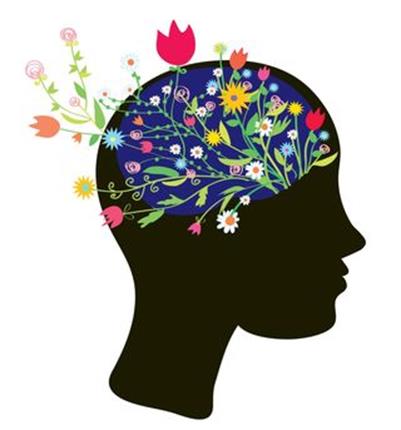
Happy brains

Powerful thoughts, powerful language, powerful body

Here is another little gem from my favourite physio and pain guru, David Butler.

The brain loves to change (have you heard of neural plasticity?) and in addition, the brain loves to swim in its ‘soup’ of neurotransmitters and hormones. The brain loves happy hormones the best to keep us and our central nervous system feeling optimum!

When it comes to language, the use of metaphor, rhyme and alliteration really sticks in the brain. Think ‘coca cola’, or ‘lululemon’ or those kids nursery rhymes (that are hard to shake from the brain despite all your trying).  Language and it’s power can turn your brain soup either happy or sad and have a strong impact on your nervous system, the way you feel, the pain levels you are in and your overall well being.

So… we are not going to dwell on our bad backs, tight traps or degenerating discs. We will instead be exercising, focussing and becoming stronger to feel good as gold and picture perfect for summer.  Let’s dive in and heal our hips, mend our muscles and turn that soup to a happy medley of hormones!


Showing 10 of 40 articles. View all blog posts.

Fix News