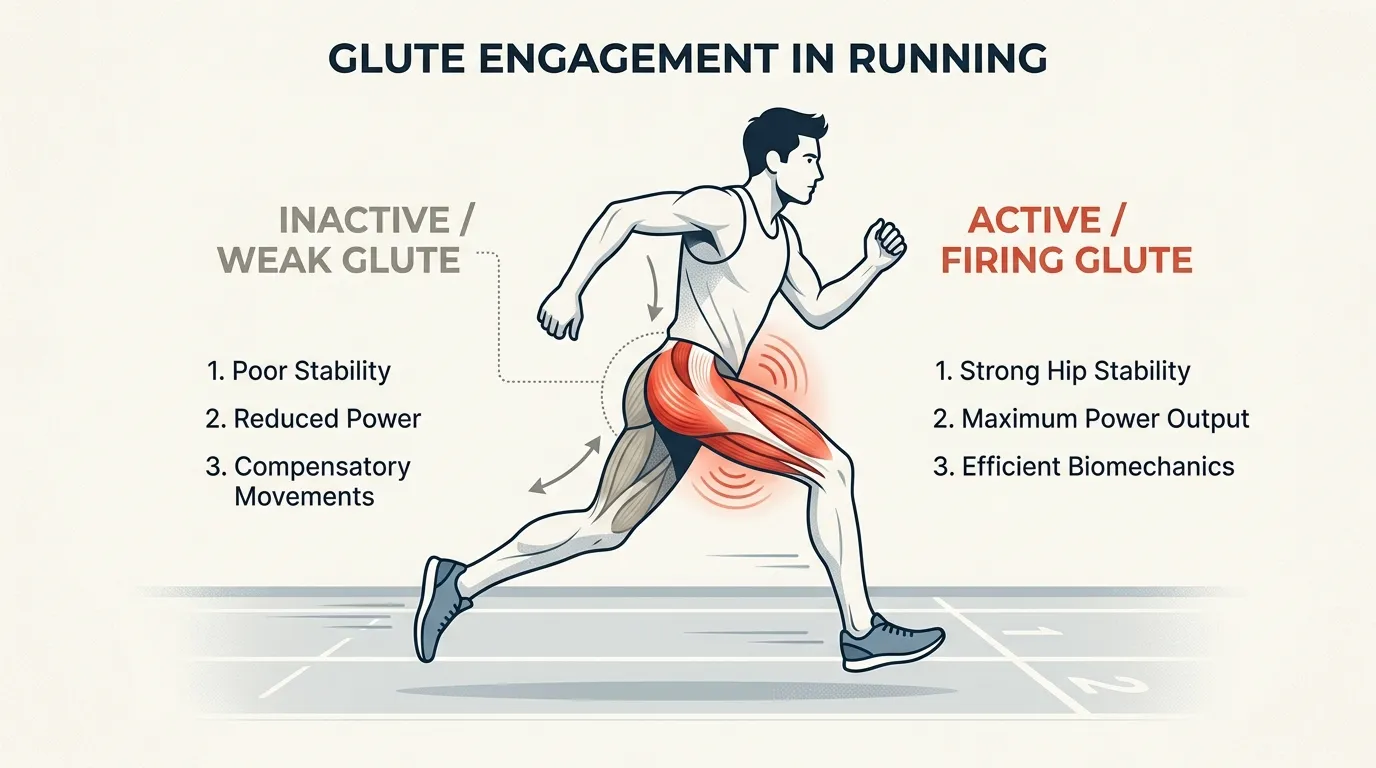
And yes, it can happen even if you run every day
You’ve probably heard the phrase “sitting is the new smoking.” Well, your glutes would agree. Dead butt syndrome — or gluteal amnesia, if you want the technical term — is exactly what it sounds like: your butt muscles have literally forgotten how to fire.
Here’s the kicker: this isn’t just a problem for desk workers. Even runners who clock serious kilometres can suffer from it. How? Because running alone doesn’t necessarily wake up sleepy glutes, especially if the rest of your day is spent seated.
What exactly is dead butt syndrome?
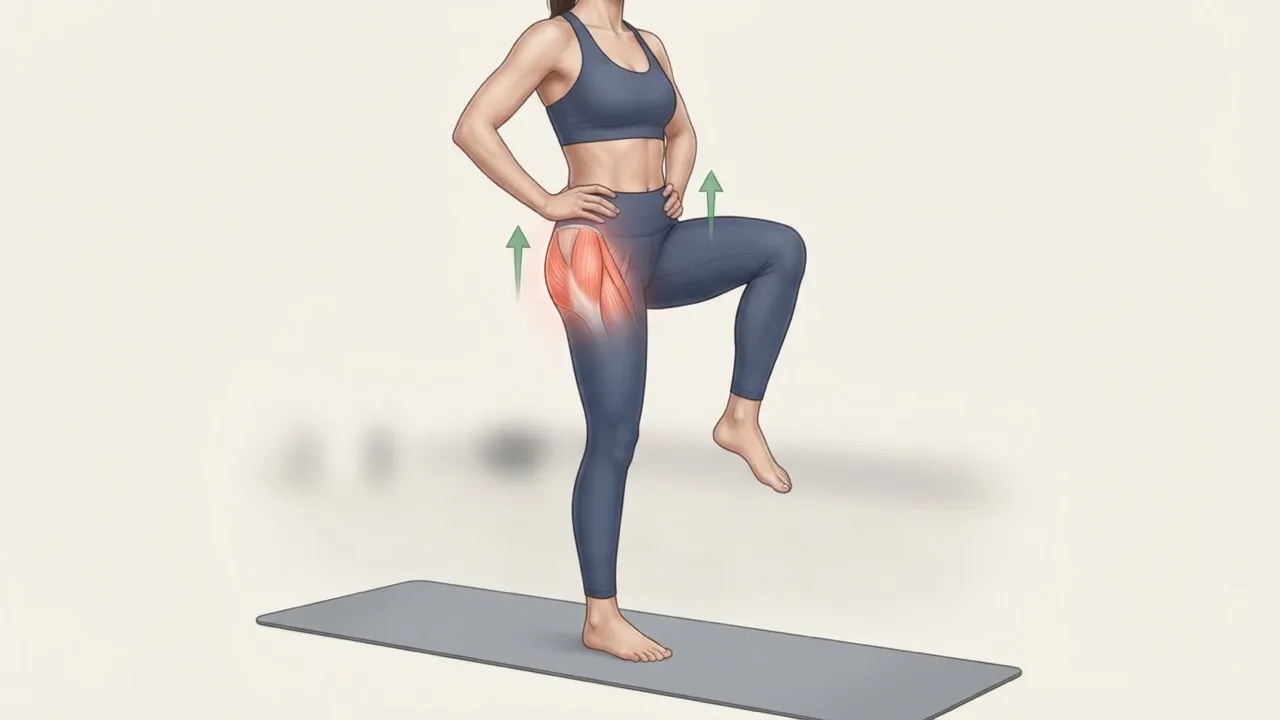
Your gluteal muscles — the gluteus maximus, medius and minimus — are meant to be the powerhouse of your lower body. They stabilise your pelvis, propel you forward, and protect your knees and lower back.
When you sit for extended periods (hello, 9-to-5), your glutes are essentially switched off. Hip flexors tighten. Hamstrings take over. And eventually, your brain stops sending signals to activate your glutes altogether — even when you stand up, walk, or run.
The result? Other muscles compensate. Your hamstrings and lower back pick up the slack. Over time, this leads to:
- Lower back pain that won’t quit
- Tight hip flexors and hip pain (see hip flexors are stealing your stride)
- Hamstring strains and calf overload
- Knee tracking issues and even IT band syndrome
- Reduced running performance — your propulsion is gone
The runner’s paradox
You might be thinking: “I run 40km a week. My glutes must be strong.”
Not necessarily. Running is repetitive and sagittal — you move forward in one plane. Your gluteus medius (hip stabiliser) and gluteus maximus (power generator) need lateral and rotational work to stay fully awake.
If your glutes aren’t firing during your runs, your quads and calves work overtime. You might notice your knees cave inward, your hips drop with each step, or you finish runs with tight calves and a sore back instead of glute fatigue.
The simple test
Want to check if your glutes have checked out?
Try a single-leg glute bridge. Lie on your back, knees bent, feet flat. Lift one foot off the ground and push your hips toward the ceiling.
- If your hamstring cramps immediately, your glutes aren’t participating.
- If your hips sag or rotate, your gluteus medius is asleep on the job.
- If you feel it burning in your butt, not the back of your thigh — congratulations, your glutes are awake.
Waking up your glutes: the fix
The good news? Dead butt syndrome is reversible. The bad news? It requires consistency, not just one Pilates class.
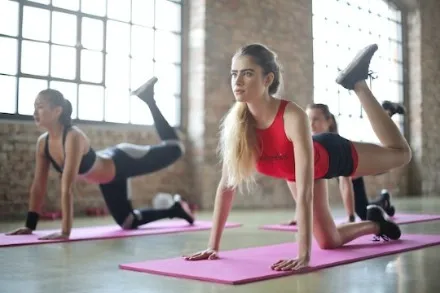
Activation with Pilates-style exercises
Before you load up with heavy squats, you need to remind your brain that glutes exist. These Pilates and physio-based exercises wake up the neural pathways. Focus on the squeeze, not the speed.
Clam (Clamshell) — Gluteus Medius Activation
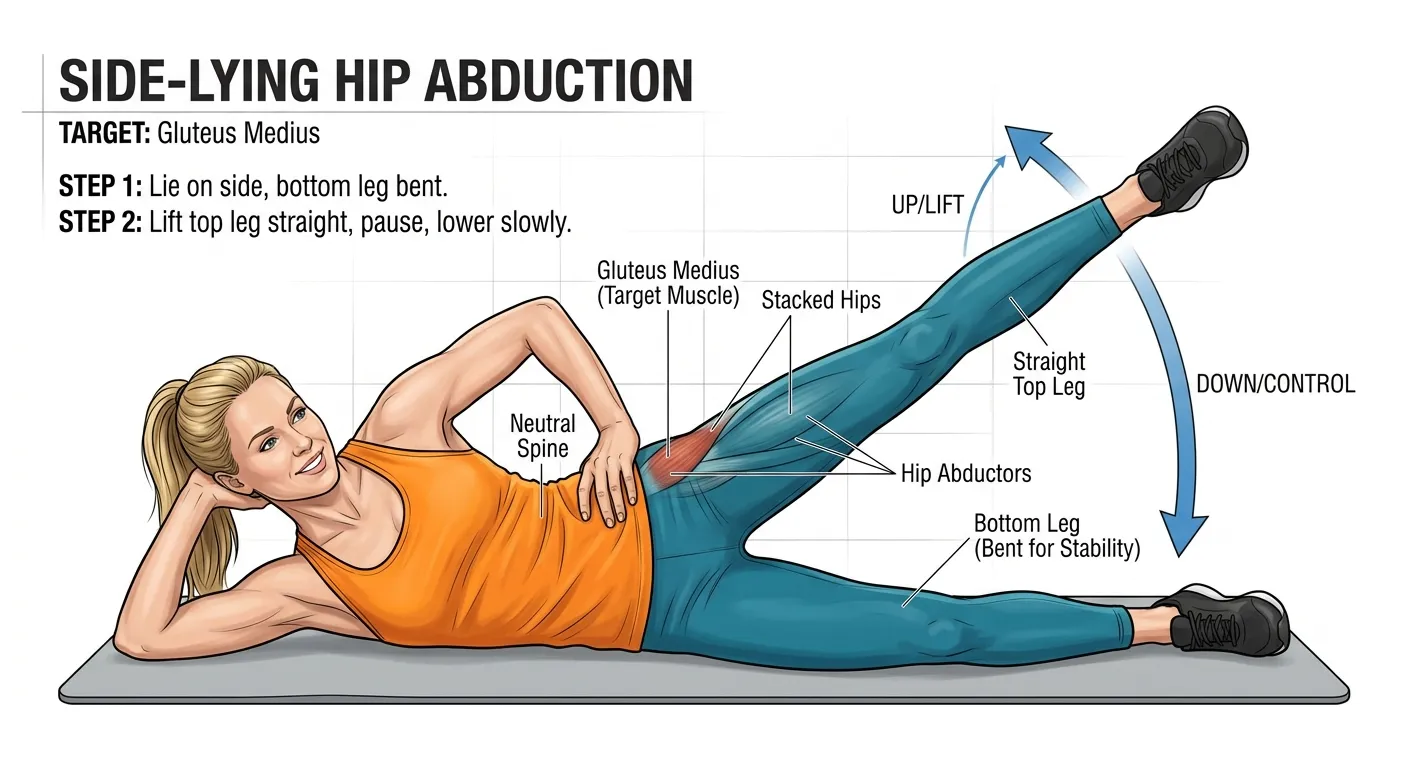
Lie on your side with knees bent at 45 degrees, heels together. Keeping your feet touching, lift your top knee like a clamshell opening. Do not roll your hips — keep your core engaged and pelvis stable. Hold for 2 seconds at the top.
- Start with: 3 sets of 12 per side
- Progression: Add resistance band above knees
Glute Bridge — Gluteus Maximus Activation
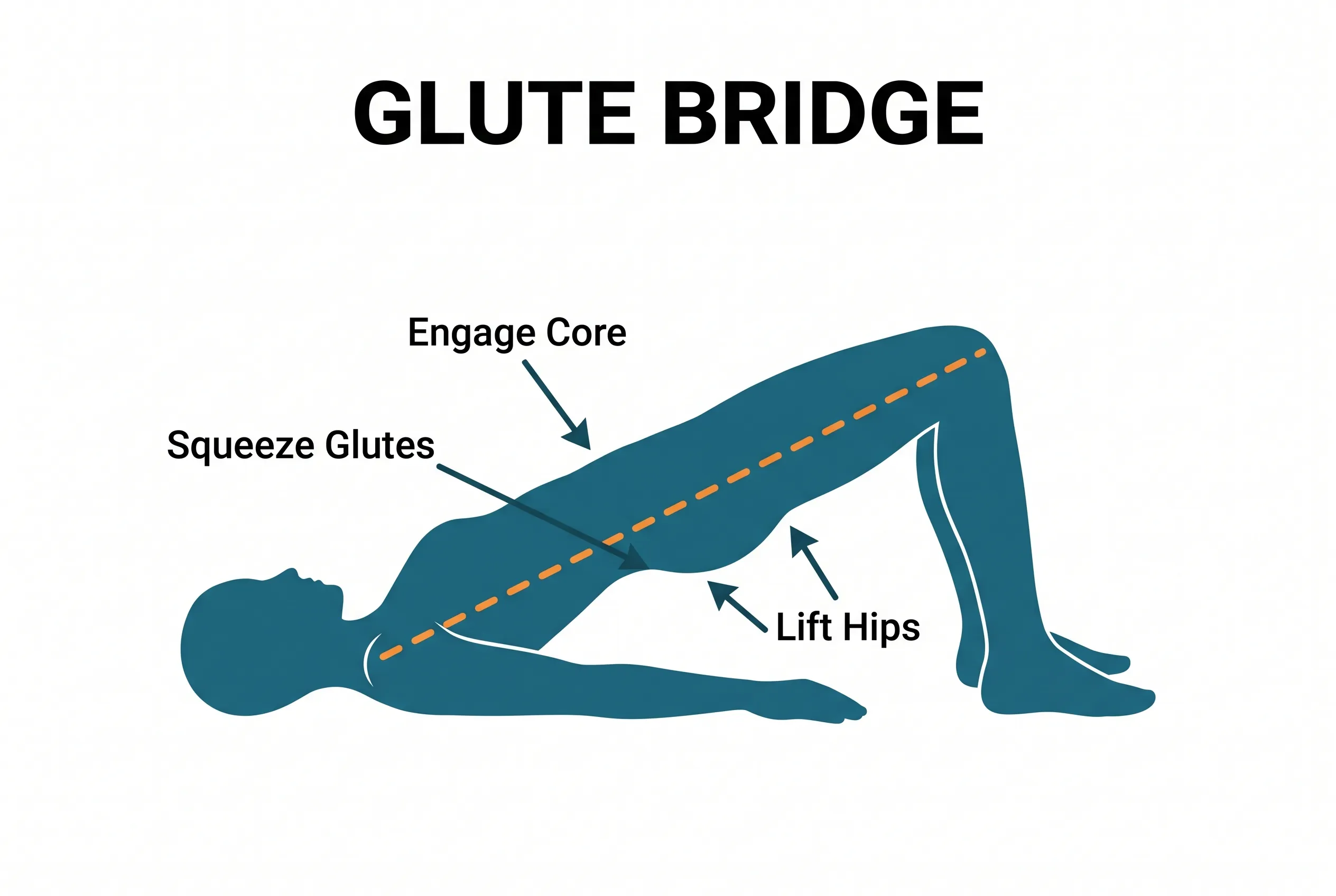
Lie on your back, knees bent, feet hip-width apart and flat on the floor. Push through your heels and lift your hips until your body forms a straight line from shoulders to knees. Squeeze your glutes hard at the top. Lower with control.
- Start with: 3 sets of 15
- Progression: Hold top position 5 seconds
Single Leg Glute Bridge — Advanced Progression
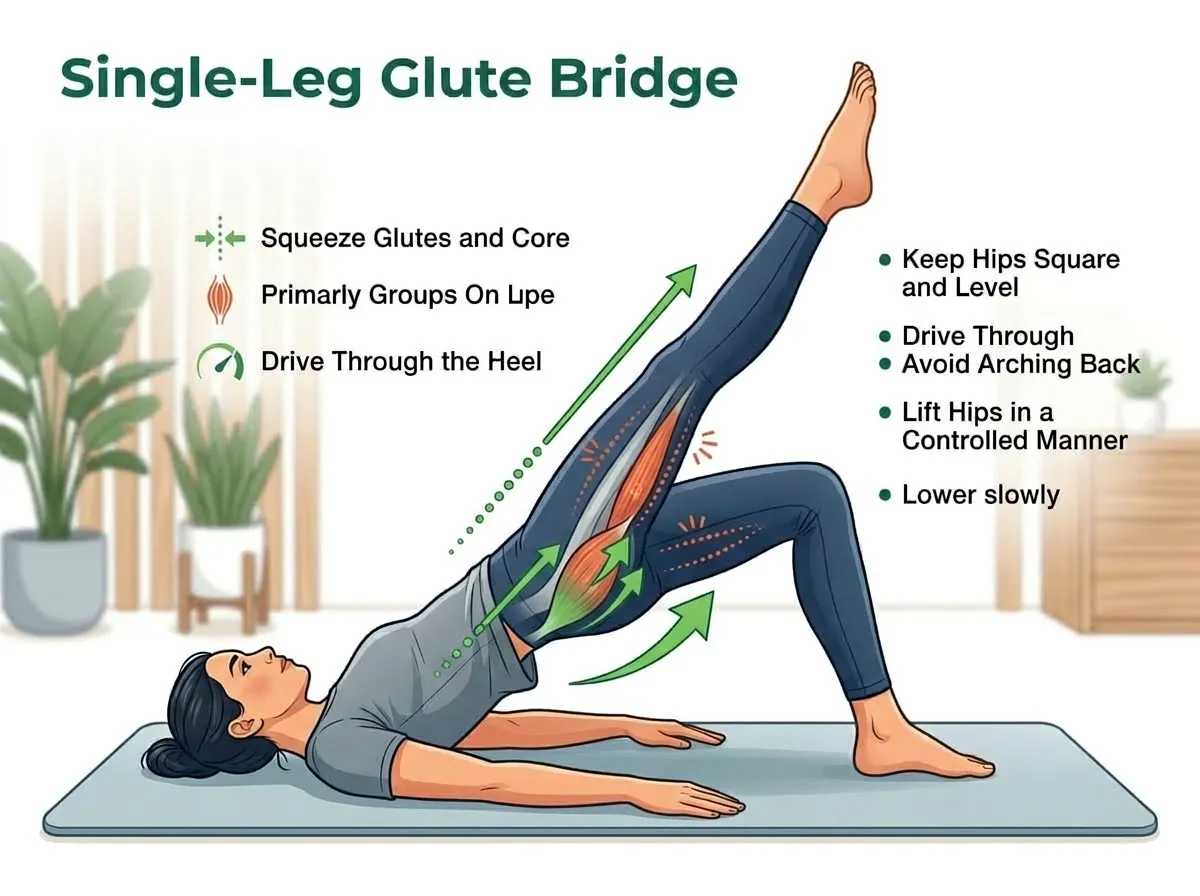
Same starting position as above, but extend one leg toward the ceiling. Push through your supporting heel and lift your hips. This targets gluteus medius stability on the working side.
- Start with: 3 sets of 10 per side
- Watch for: Hip dropping on one side = medius weakness
Lateral Band Walks — Gluteus Medius Strength
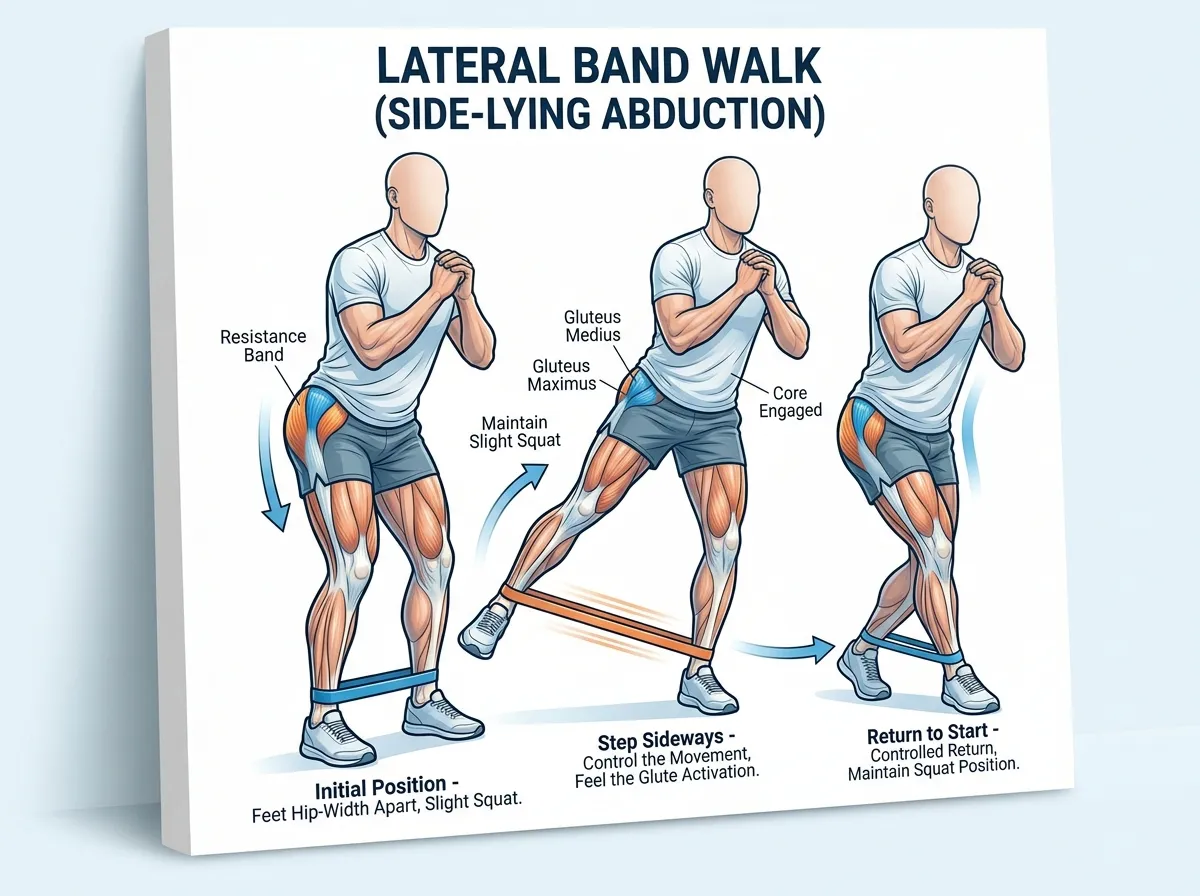
Place a resistance band just above your ankles. Stand in a slight squat position, then step sideways while keeping tension on the band. Do not let your knees cave inward. Small, controlled steps.
- Start with: 2 sets of 10 steps each direction
- Progression: Lower band toward feet (harder)
Functional strength progression
Once you’ve activated your glutes with the exercises above, add these functional movements:
- Single-leg squats and step-downs
- Walking lunges with focus on hip extension at the top
- Single-leg deadlifts (bodyweight to start)
Break up the sitting
Set a timer. Stand up every 45 minutes. Walk to the kitchen. Do five bodyweight squats at your desk. Your future running self will thank you.
The bottom line
Your glutes are the biggest muscle group in your body. When they go on strike, everything else suffers — your back, your knees, your times.
Whether you’re a desk worker training for your first half-marathon or a seasoned runner wondering why your hamstrings always feel tight, check in with your glutes. Are they actually working, or just along for the ride?
For more on building hip stability through targeted exercises, see Pilates and Hip Stability. If you’re dealing with lower back pain, waking up your glutes is often the first step.
Wake them up. Your running — and your back — depends on it.
Wake your glutes up at home with our 40 Minute Butt Band Challenge — physio-led, on demand.