What can physiotherapy and exercise do to fix my hip?
Hip anatomy 101

Your hip joint is a “ball and socket” - the ball sits atop your femur, or thigh-bone - this round portion is called the “head” of the femur. The head fits into the socket in your pelvis. The socket fits tightly around like a baseball glove, and the joint is surrounded by a joint capsule made of strong connective tissue. The joint capsule ensures the ball stays within the socket, while your muscles guide the rod of the femur around the socket smoothly to allow full range of movement of the hip.
At least, that is what is supposed to happen!
What can go wrong?
If you ever feel hip pain or catching deep in the front of your hip, you could have femoroacetabular impingement (FAI). Simply, a ‘pinchy hip’.
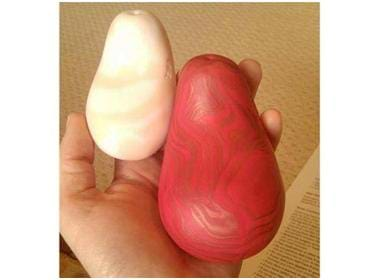
The movements most often associated with this condition are pulling your knee up, turning it inward or bringing it across your body - especially when all of these are combined at the same time, as seen by the picture below. This impingement, or blocking of joint movement can be due to a malformation of the bones involved in the ball and socket, and can affect anyone, from the young and physically active to the middle-aged and above. It is both painful and limiting to your movement.
What does it feel like?
The pain typically occurs deep within your groin or the front of your hip, though it can affect your outer hip or buttock in rare cases. The joint usually feels stiff and sharply restricted in motion in the directions mentioned above. It may affect only one joint, so it could feel very different to your other hip by comparison. It may come on suddenly after an injury or build up over time with age and joint wear and tear.
Why does it happen?
The deformation of the bones in the joint could be congenital (from birth) or build up over time in response to overuse or trauma. Some typically affect younger people, especially athletes. If the muscles surrounding the socket - typically the hip flexors and internal rotators - are overused and become tight, the ball is pulled forward in the socket, causing a shrinking of the back of the joint capsule. As the head of the femur is pushed toward the front of the hip and down, it grows larger and further down the bone.
These same factors can build up gradually over long periods of time, typically affecting older people.
Things that aggravate it: What makes it worse?
The movement(s) that cause the bones to knock together will result in a catching pain. If you have hip impingement, you will most likely notice it while:
-Sitting for a long period of time
-Walking, running
-Crossing your legs
-During or after leg exercise
How can physio/Pilates help?
If you think you may have this type of hip pain, see your Physiotherapist for a complete testing and diagnosis. If we suspect you have it, we can do the following such as:
-
applying pressure through your hip joint to stretch out your stiff joint capsule
-
massaging to loosen and release the tight muscles in the area of the hip, especially in the back of the hip and buttock area
-
provide you with a range of exercises to improve the range and control you have in your affected hip. These will help you to draw the ball back and down as you move into triggering positions thereby avoiding bone on bone catching as much as possible.
If necessary, you can consult a doctor to advise on pain and anti-inflammatory medicine, and in severe cases a surgical consult may be a necessary step to ensure best treatment and management of FAI. If surgery is required, your physio will play a vital role in your post-operative care to ensure you make a full recovery.
Exercises for hip impingement
Push the head of the femur back. Lie on your back and lift the knee of your affected leg directly above your hips. Clasp your hands over your knee and push directly down through the line of your thighbone towards the floor. Do two sets of ten, applying firm pressure.
Push the head down, socket out. Stand with your feet wide apart. While keeping your affected leg straight, bend your other knee and fold through the hips, pushing your bottom out as you go. Once you feel the inner thigh of your affected leg stretch, use your hand to firmly press down on your upper thigh - make sure your hand is as high up as possible, near the groin. Do two sets of ten.
Stretch the front of your hip. Kneel on the knee of your affected leg and bend your other leg up in front of you. Rest your hands on either side of your front foot and press your hips forward and down towards the ground. You should feel a stretch across the front of your affected hip, hold it for 30 seconds and repeat.
These mobilising and alignment exercises should be coupled with a precise exercise program of hip and pelvic stability strengthening exercises to optimally return good strength, support and movement control about the hip region.
Join an online class from the comfort of your home - Katrina the principle physio at The Fix Program has designed a series of Pilates exercise programs that will help you immensely.