
Postnatal exercise works best on a timeline, not on willpower: pelvic floor first, deep core next, full strength last. Here’s the physio-approved sequence.
I’m Katrina Tarrant, principal physiotherapist at The Fix Program in Sydney CBD. I’ve guided hundreds of women through the months after birth — in the studio, and through the postnatal pilates classes we built for the days when getting out of the house with a newborn just isn’t happening. Here’s the honest version of how recovery actually works, and how to exercise your way back without setting yourself back.
The postnatal recovery timeline: what’s happening and when it matters
Your body ran a nine-month transformation. The return trip takes about as long.
Weeks 0–6: protect and reconnect. However you delivered, your pelvic floor, deep core and diaphragm have spent months under load and are now recalibrating. This is not the phase for training — it’s the phase for learning to breathe properly again, gentle walking, and letting sleep (when you get it) do its repair work. If you had a caesarean, add wound care and the gentle re-mobilising of your scar area to the list.
Weeks 6–12: rebuild the foundation. Once you’ve been cleared at your six-week check, this is where structured postnatal exercise begins: reconnecting your breath to your pelvic floor, retraining the deep abdominal corset, rediscovering good posture while carrying a baby who gets heavier every week. Everything here should feel supported, never straining.
Months 3–6: build strength on that foundation. Once the deep system is coordinating again — no leaking, no heaviness, no doming along your midline — you can progress toward real strength work. This is the phase most women skip, and it’s the one that decides whether your body tolerates running, lifting a toddler, or returning to the gym.
Six months and beyond: full loading, as tolerated. The timeline isn’t a race; it’s a sequence. Skipping a stage is how “minor” niggles become prolapse symptoms or long-standing back pain.
Exercises to avoid vs exercises to prioritise
Hold off on these until your deep system is genuinely ready:
- Traditional crunches and full planks. They hammer the very abdominal wall that’s healing, and can worsen abdominal separation — see our guide on what diastasis recti really means.
- High-impact work early. Running and jumping load a pelvic floor that’s still recovering. The classic mistake is returning to running at six weeks because you “feel fine” — the bladder-leaking at three months says otherwise.
- Heavy lifting with breath-holding. Bracing and bearing down (Valsalva) pushes pressure straight down through your recovering pelvic floor.
- Anything that leaks, drags, or domes. Leaking urine, a feeling of heaviness, or a ridge running down your midline during exercise are your body’s stop signals. Don’t push through them.
Prioritise these — they’re the actual recovery work:
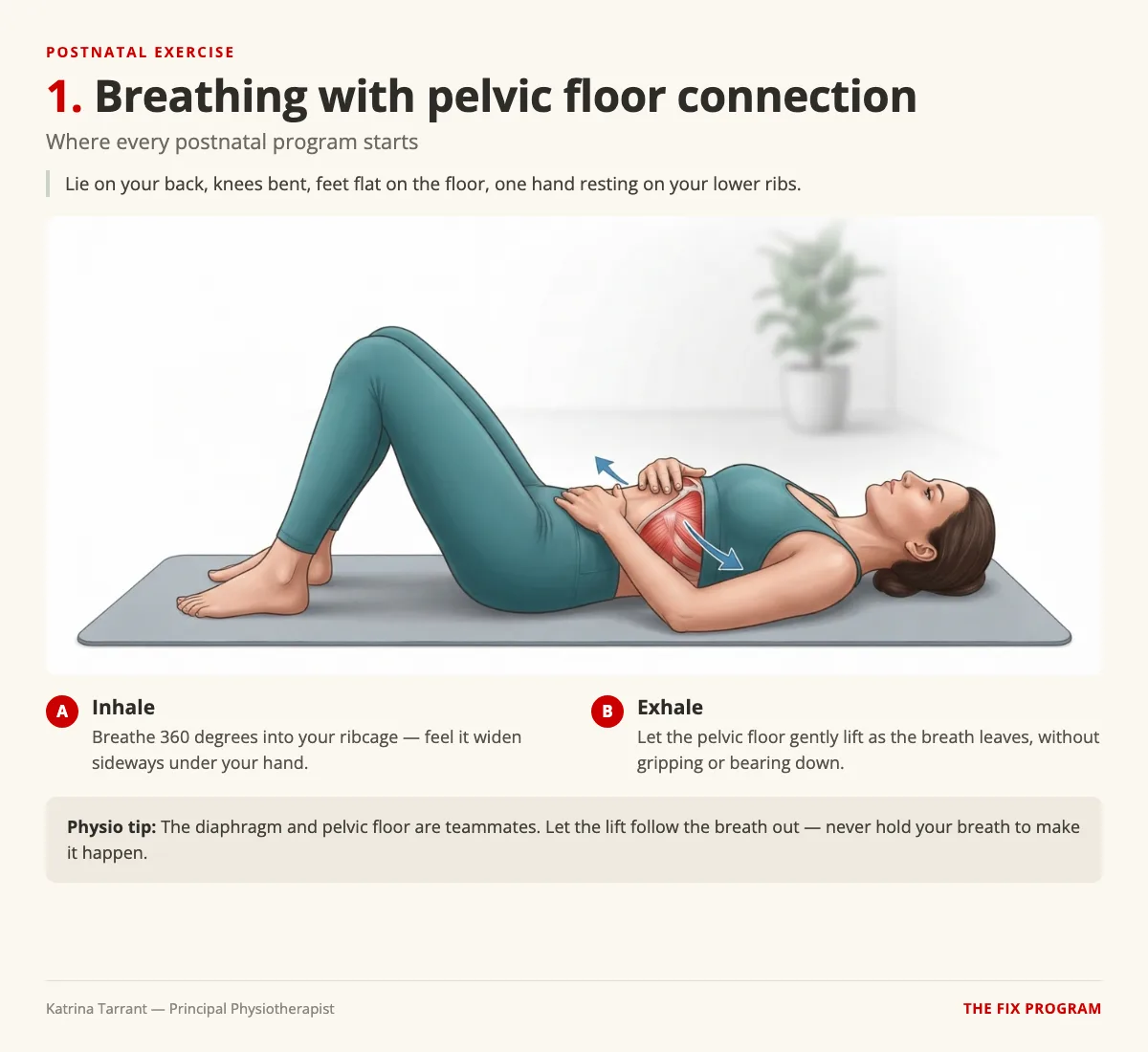
- Breathing with pelvic floor connection. The diaphragm and pelvic floor are teammates; re-learning to breathe 360 degrees into your ribcage while gently lifting the pelvic floor is the first exercise in every postnatal program I write.
- Walking, progressing gradually. The pram is your first piece of exercise equipment. Start with 10–15 minutes and build.
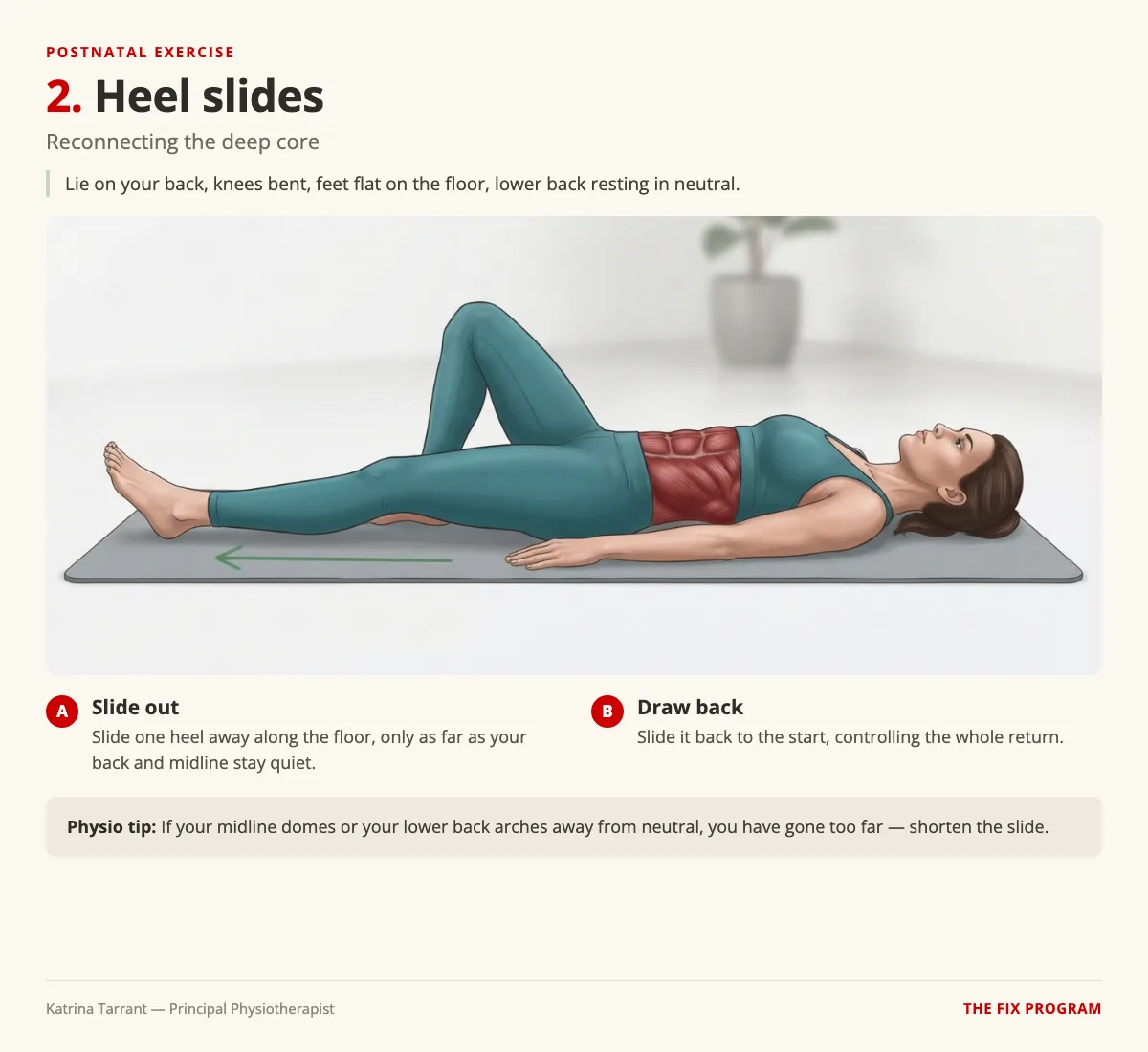
- Pelvic tilts and heel slides. Gentle, supine movements that reconnect the deep core without strain — the same foundation movements we use in the studio.
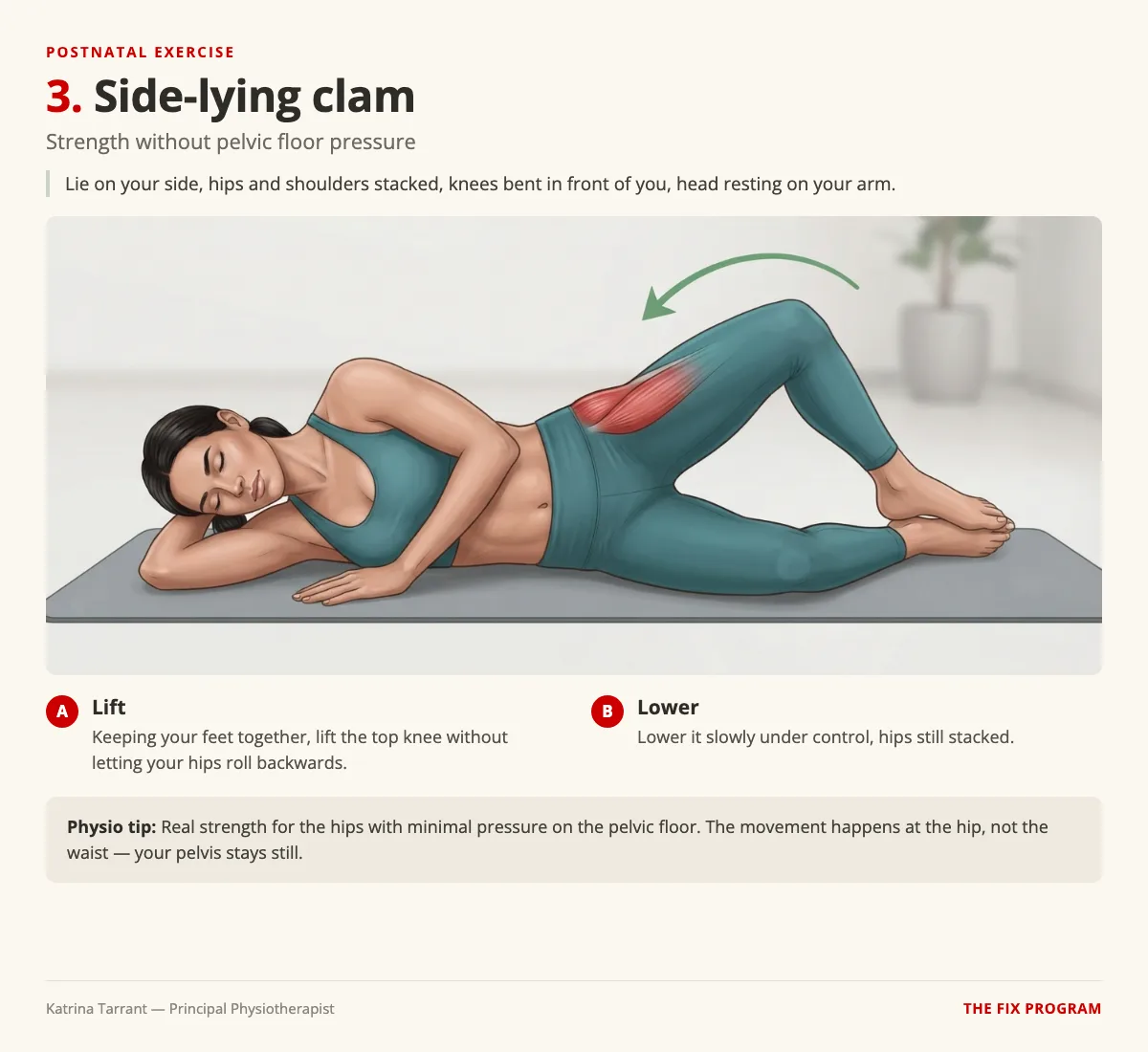
- Side-lying and four-point kneeling strength work. Clams, book openings, quadruped hip hitches: real strength for the core and hips with minimal pressure on the pelvic floor.
- Carry mechanics. You lift a baby forty times a day. Learning to do it with your legs and a quiet midline turns constant loading into constant practice.
When getting to the studio isn’t possible, do the classes at home
Here’s the thing about postnatal exercise: the hardest part isn’t the exercises. It’s getting to them. Feeds don’t follow a timetable, naps don’t line up with class times, and the idea of packing the bag, the pram and the baby to be somewhere at 10am can be the very thing that stops all exercise.
That’s why we built the online postnatal program — the same physio-designed progression I use in the studio, structured so you can press play during a nap window, with bub on the mat beside you. Short sessions, real progressions, and no judgment if you have to pause it halfway through for a feed. Start with the free postnatal workout and see how the format fits your new normal.
When a postnatal physio assessment is worth the trip
Some signs mean “keep going, gently”: mild core fatigue, ordinary muscle soreness, the general deconditioning of new parenthood. Others mean “get assessed before progressing”:
- Any urinary leaking when you laugh, cough, lift or exercise
- A feeling of heaviness, bulging or dragging in the pelvis or vagina
- A visible dome or cone along your midline during core work
- Caesarean or perineal scar pain that isn’t settling
- Back or pelvic pain that’s worsening rather than improving
An assessment isn’t a hurdle — it’s the fast track. Ten minutes of checking how your pelvic floor and deep core are actually firing saves months of guessing, and our team works with new mums every day (see pregnancy physiotherapy for what we assess and treat, or our postnatal pilates classes for the in-studio path).
The physio’s bottom line
Your return to exercise after baby isn’t a test of willpower — it’s a sequence. Protect the pelvic floor, rebuild the deep core, then earn your strength back in order. Do it in that order and your body will thank you for decades; skip the order and it usually sends an invoice later.
Start your recovery at home with our postnatal program, grab the free workout first, and if anything on the “get assessed” list sounds familiar, book in and let us take a look.