The Fix Program Blog

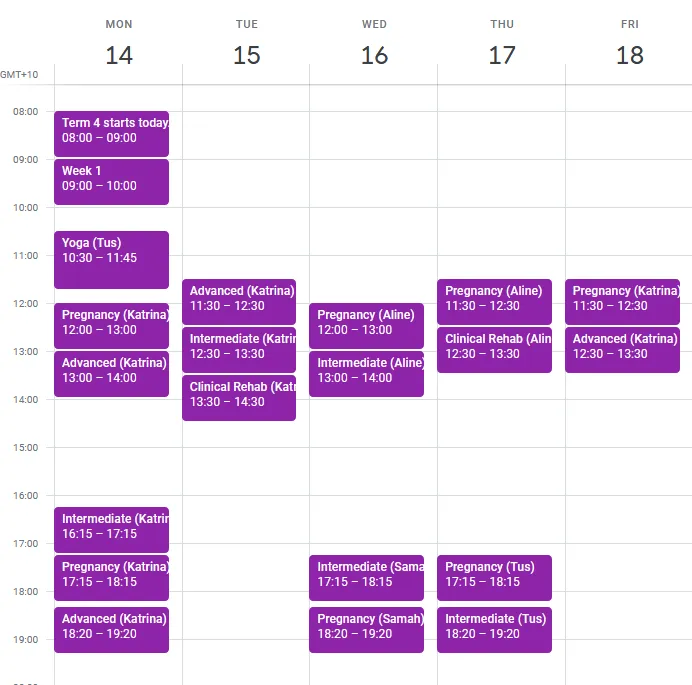
Draft CBD 'term 4 2019' Pilates timetable

Draft ‘term 4 2019’ Pilates timetable is subject to change.

These classes will run for 10 WEEKS in our YORK STREET CBD clinic.

Classes will commence from Monday 14th October and end Friday 20th December 2019.

Classes for this term at our York Street CBD clinic are recommended and scheduled for:


9 Sept 2019 BY Katrina Tarrant POSTED IN Exercise, Pilates

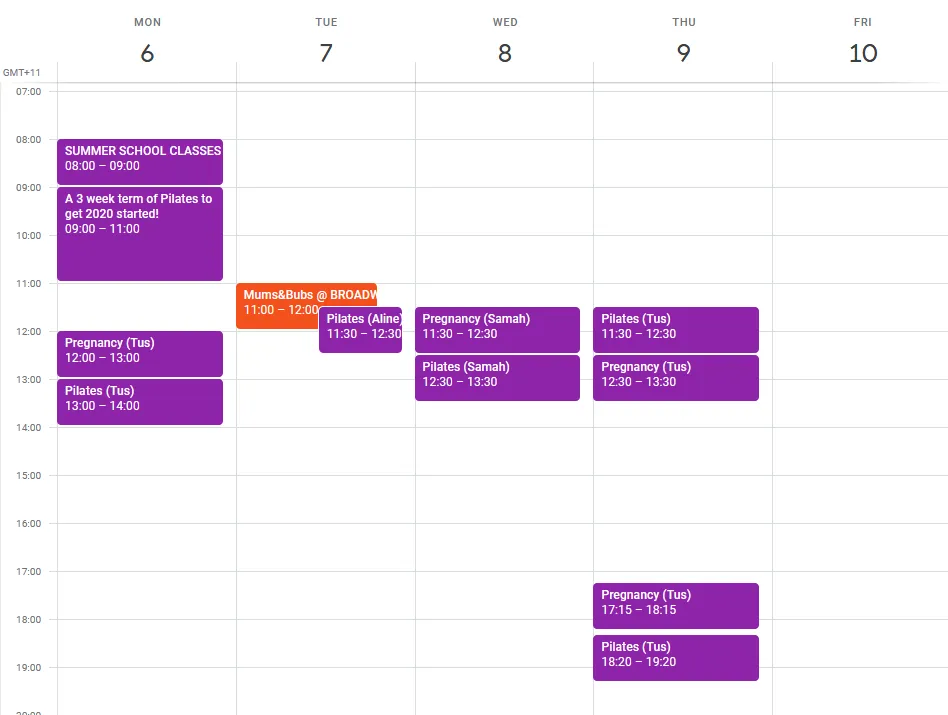
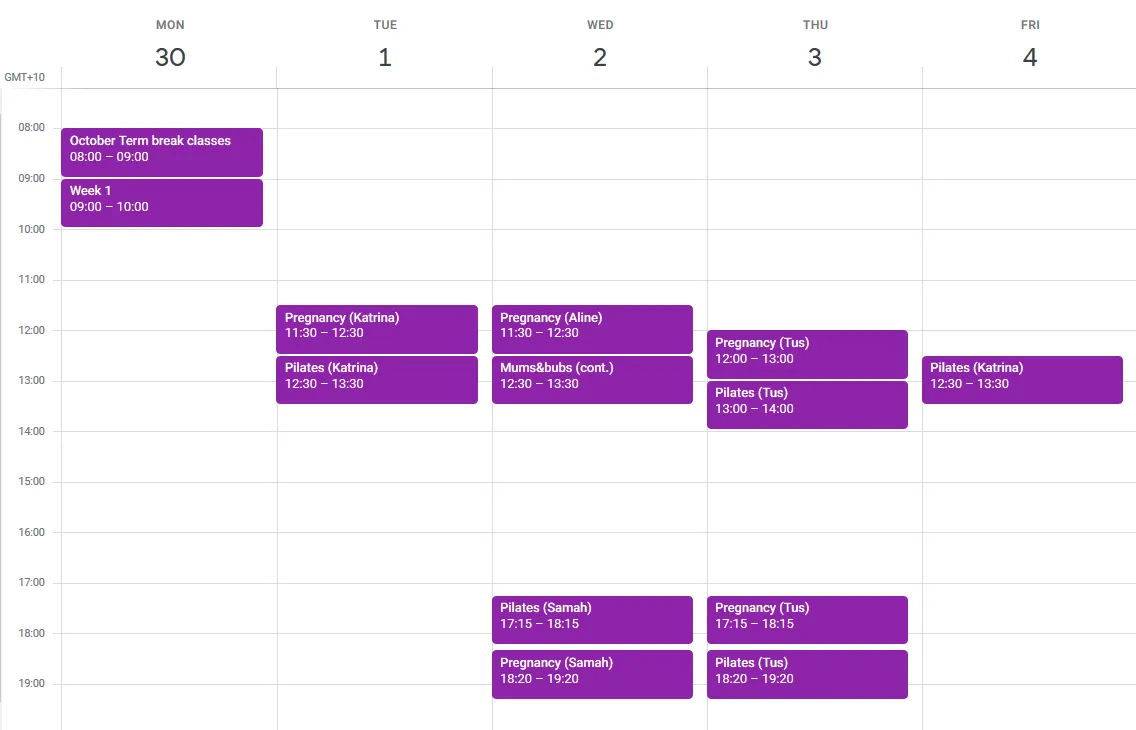
Draft CBD October term break timetable

Draft ‘October term break 2019’. Timetable is subject to change.

These classes will run for 2 WEEKS in our Sydney CBD and Broadway clinics. Classes will commence from the week commencing **Monday 30th September.
**

Classes are recommended and scheduled for:

  • Intermediate/advanced  mixed level Pilates for challenging and functional postural control. These classes are suitable for our existing Pilates clientele currently attending our clinical rehab, intermediate or advanced classes in 2019.
  • Pregnancy specific Pilates. These classes are suitable for our existing pregnancy Pilates clientele currently attending our classes, or have been assessed to be ready for these classes.
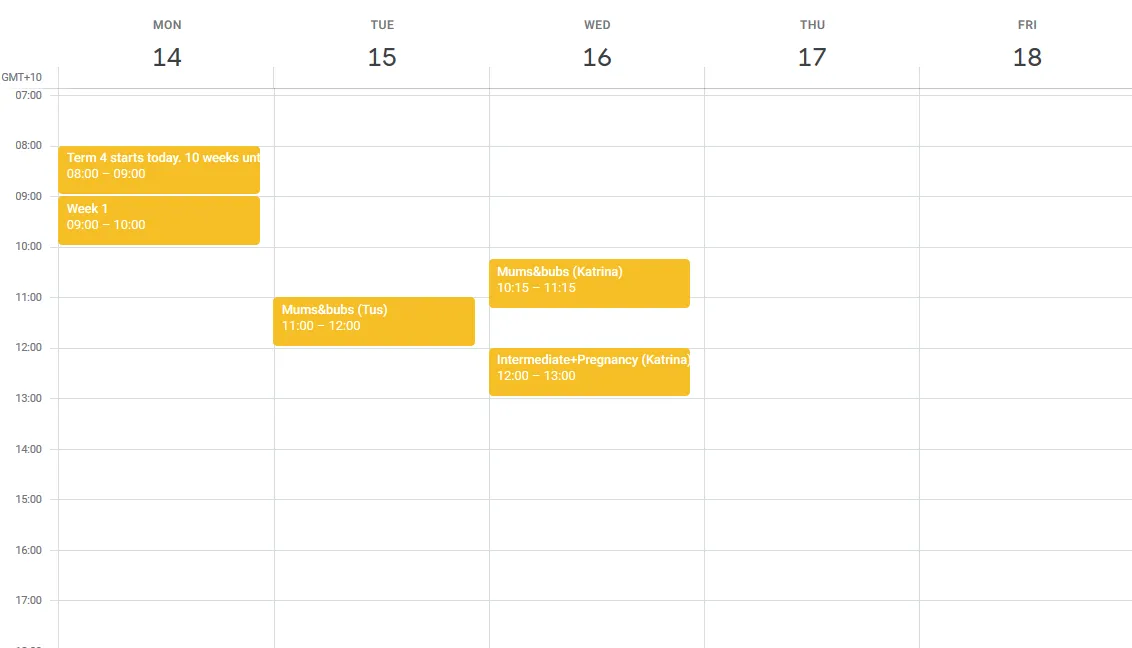
  • Mums&bubs Pilates. Safe pelvic floor, belly and postural awareness exercises with bub in tow!

CBD timetable:

Broadway timetable:


15 Aug 2019 BY Katrina Tarrant POSTED IN Physiotherapy, Sydney CBD

Our 30% offer for a 3 appointment physio package!

Come and save on physio!

**WOW! Last year to celebrate Fernwood Gym’s 30th birthday, we offered a 3-appointment physiotherapy package for 30% off our usual clinic fees for all members and their friends . We were thrilled with all those who took this up and those we have met we have helped to achieve their physical goals.  Because of this and to celebrate our wonderful new women’s health physio Samah at Broadway gym, we have decided to continue this offer in 2020.
**

 Now is the time to have that physio that you have always been putting off.

  • Do you have back, hip or pelvic pain?
  • Is your neck or back bothering you sitting at work all day?
  • Is your shoulder and neck feeling sore after weights?
  • Is your knee really stopping you from running, squatting or jumping to your full potential?
  • Do you worry about your posture and want targeted exercise to move better and feel taller?
  • Do you or someone you know put up unnecessarily with incontinence?
  • Do you suffer from sexual pain? or from endometriosis? or prolapse?
  • New mums, are you concerned about bladder control or ab separation? Have you just had a baby and your back and pelvis still feel not quite right?

This is just the tip of what we do as physios at our clinics.

What does this special include?

  • 1 full assessment ( 45 minutes for joint and muscle injury, or 60 minutes for any pelvic floor concern)
  • 2 follow up appointments to really start to get your issue sorted - physio treatment, massage, targeted exercise prescription for your movement or pelvic floor problem, gym safe exercise to keep you working out, chats with your personal trainers on any exercise mods needed ( these follow up appointments can be 30, 45 or 60 minutes in length - up to you)

What do I do next?

Contact us on 92640077, or email  broadway@fixprogram.com to chat about this offer and to schedule your first appointment with us.

Do you have a friend or family member who would love to see us? Refer them on to see our physios at these locations.

Term&Conditions
3-appointment package must be paid for upfront to receive the 30% off total fees for the 3 appointments
For muscle and joint issues, see https://www.fixprogram.com/physiotherapy for fees and what to expect
For pelvic floor issues, see https://www.fixprogram.com/womens-health for fees and what to expect
You can claim these appointment fees with private health insurance ( code 500 for the assessment and code 505 for any followup appointments)
A receipt will be issued for your claiming online to receive your rebates
30% does not apply to any sale of equipment by your physio, if needed
Treatments purchased within the 3-pack are valid until 31 December 2020.
One per person please.
Valid for brand new clients to our clinics, or to those we have not seen for over a year and who are returning with a new issue.


14 Aug 2019 BY Katrina Tarrant POSTED IN Physiotherapy

Meet the 'huff': an alternative to coughing to clear the lungs

The magic of ‘the huff’ when a cough just won’t do the trick

by Tusanee Jierasak, physiotherapist

So it’s the middle of winter.  And if you travel to work on public transport, like me, you might travel in fear, cowering and shrinking away from anyone who is coughing and sneezing everywhere. If you have unfortunately picked up a cold, and it has eased but now you are left with an enduring cough and everlasting phlegm in the chest, please read ahead.

Many don’t realise that physios can specialise in respiratory work, dealing with all things to do with the heart and the lungs. I used to work in a hospital and one of the things respiratory physiotherapists do is to teach people how to breathe properly, and very importantly, how to cough efficiently to be able to remove phlegm (to prevent risks of developing respiratory complications). And I would like to share that with you.

Firstly, what is phlegm / mucus?

Phlegm is the term that refers to muscus produced in the lungs and lower respiratory tract. It is a gel-like protective layer that traps irritants, contains antibodies, and moisturises. As you stretch it, it becomes less thick and sticky and more like a liquid. Normal lung production is 10 to 100mls per day.  However, during a cold or flu, there is increased phlegm production, a change in colour, and it is more viscous (thicker and stickier) which makes it harder remove.  This can lead to the symptoms throughout the whole respiratory system, such blocked sinuses, difficulty breathing, and coughing fits to try and remove the phlegm from the lungs. 

How do I cough correctly to clear phlegm?

You have probably heard those people on the bus or train taking multiple short shallow coughs. These are ineffective. The best way to do an effective cough is:

  • Take a deep breath in
  • Close the glottis (back of the throat) for a second or two
  • Then open the glottis (back of the throat), engage your abdominal muscles, and perform an explosive breath out

This should help the phlegm come up from the lungs into the mouth.  A few of these big coughs, will be a lot more effective than lots of short shallow ones.

Don’t forget to cover your mouth!

What is a huff?

If you are too tired, or it is too painful to perform big coughs, you might like to try a huff. Huffing is a different way to move the phlegm through the airways, closer to the mouth.  

  • Take a deep breath in
  • Keep the back of the throat open
  • Engage your abdominal muscles, and breathe out short and forcibly through the mouth like trying to fog up a mirror

You can use huffing to bring the phlegm to a more central position in the lungs, and then take a big cough to remove it. Or you can try huffing with smaller or larger breaths in, to move the phlegm from different areas of the lungs, depending where it is stuck.

If you feel dizzy or lightheaded with these techniques, take a few gentle, relaxed breaths in between techniques.

Have a practice of these techniques right now as you are reading this, and then remember to give them a go next time you get stuck with a chesty cough.


10 Aug 2019 BY Katrina Tarrant POSTED IN Women's Health

Endometriosis

By Carrie Seow, women’s health physiotherapist

Endometriosis has gathered some attention recently in the media after the government in June 2019 announced $9million in funding for research and improved diagnosis. This is great news for the ‘endo’ community and those yet to be diagnosed. We know that endo can be a debilitating condition affecting 1 in 10 women. More shocking is that diagnosis can take years as women suffer in silence. As health allied professionals (women’s health/pelvic floor physiotherapists) we want to raise awareness about this condition and help treat the symptoms.

So, what is endometriosis?

Endometriosis is a complex condition whereby the cells that line the uterus start growing in other parts of the body, commonly in pelvic region on the bladder and bowel. Symptoms of endometriosis are highly variable but common ones include:

  • Abdominal, lower back or pelvic pain
  • Ovulation pain
  • Pain before or during periods
  • Heavy or irregular bleeding during periods
  • Urinary urgency and frequency
  • Bowel problems ranging from diarrhea to constipation
  • Abdominal bloating
  • Vaginal discomfort, painful intercourse or difficulty using tampons
  • Infertility

The presentation of endo is so different between patients that diagnosis is only officially done through the gold standard of a laparoscopy (a keyhole surgical procedure through the lower abdomen). The chronic nature of endo symptoms can seriously affect your quality of life. You may be living with chronic pain every day but still have to go to work, school and function as best as you can in day to day life.

Can anything make endometriosis better for the sufferers?

The good news is that help is available. Treatment of endo requires a multidisciplinary approach (including pelvic floor physiotherapy!). It can involve a mix of

  • medication
  • surgery
  • exercise, manual therapy with a physio
  • diet and lifestyle modification
  • bladder and bowel retraining with a pelvic floor physio
  • relaxation, stretches and yoga style movements to decrease the tension and pain of the hip and pelvic region.

But with the right team of people, the symptoms can be well managed. If you suffer from any of the above symptoms, come and chat to one of our women’s health physiotherapists to find out how we can help!

Read our post back in 2014 on endometriosis and chronic pelvic pain for further information.


10 Aug 2019 BY Katrina Tarrant POSTED IN Physiotherapy

Physios and prostate cancer

Did you know pelvic floor physiotherapy can help men with erectile dysfunction and incontinence, often present after prostate surgery?

By Aline Filipe Nunes, pelvic floor physio for both men and women

With September next month raising awareness for prostate cancer, we thought we would start the conversation among you men. The effects of post prostate surgery are not well discussed, leaving men often suffering in silence.

Did you know that, here at The Fix Program, we help people recovering from prostate cancer treatment?

 What is cancer of the prostate?

The prostate is a small organ that is located under and around the bladder neck in men. The prostate is part of the male reproductive systems because it is responsible for producing prostatic fluid which nourishes sperm and, for normal function, it requires testosterone.

Prostate cancer is the most commonly diagnosed cancer in men and it occurs when abnormal cells develop in the prostate. While it can be localised or it can spread to other organs, early management is key.

The most common symptoms are:

  • increased urinary frequency or sudden urgency,
  • painful urination
  • difficulty in starting urination
  • finding blood in the urine
  • lower back pain, groin and thigh pain.

Although these symptoms alone may not mean you have prostate cancer, your doctor, according to your personal and family health history, should access if it is important to do further testing, such as blood tests, rectal examination or biopsy.


Prostate surgery and the recovery path

Unfortunately, surgery and cancer treatment can lead to several side effects and not many know of these until having to face surgery. Because functionally, the prostate functions as a sphincter, it is common for men to have urinary incontinence after surgery.

Additionally, because the prostate also helps with sexual function such as the erection and production of the prostatic fluid, after surgery and treatment, it is difficult to maintain a full erection. Ejaculation after treatment is also limited, meaning that although men can reach an orgasm as they could before, the orgasm is “dry”.

Depending on the type of cancer treatment, men can also experience bowel disturbances or also low libido (often because of the fatigue levels, the emotional shock and trauma lived and due to the fact that the levels of testosterone may be tampered by hormone therapy).

But there is help here.

  • Pelvic floor physiotherapy can help men retrain their pelvic floor so the urethral sphincter can be reprogrammed to work without a prostate.
  • Exercise has also been proven to be highly beneficial to those after cancer as it has been proven to reduce fatigue and cancer recurrence, improves sleep quality and vastly improves your quality of life.
  • Strengthening exercise also seems to be linked with improved libido which can help in the long term.
  • Pelvic floor physiotherapy can help you reaching better erection via the education and use of several tools such as penile pumps, penile rings and pelvic floor exercises.

 Embrace your new life after prostate cancer

Here at The Fix Program we believe that cancer should not be the end but the start of a new phase of your life where you can embrace health and your new life.

If you were diagnosed with prostate cancer or you know anyone who was affected by it, there are several sources that can give you and your family great information about prostate cancer and treatment management.

Please check the links below for more information.

September is Prostate awareness month day and The Fix Program would like to acknowledge the strength of everyone who had, were diagnosed and are undergoing prostate cancer treatment! We would also like to acknowledge the work of all of those researchers and health professionals who contribute to the body of knowledge in the field and that work daily towards finding ways to improve patients’ quality of life and survival.


9 Aug 2019 BY Katrina Tarrant POSTED IN Exercise, Physiotherapy

Knee reconstructive surgery

A torn cruciate ligament may not mean immediate reconstruction

By Julia Newton, physiotherapist

We’ve all seen it on television and cringed. The footballer stepping to pass a defender, his body weight going one way and his knee the other. This is followed by the big man collapsing on a knee buckling inward. Ooooh! The commentators lament on a possible anterior cruciate ligament (ACL) tear with a passing mention of year off to rehabilitate. Australia has the highest reported rate of ACL reconstructions in the world, costing an estimated $142 million per year for hospital systems.

For those that aren’t familiar with ACL, it is a ligament that runs from the femur (thigh) to the tibia (shin) and its purpose is to limit excessive forward translation or slipping of the knee joint. Without this important ligament, the knee can feel unstable and weak.

Despite it being such an important ligament, it is actually possible to function with a complete ACL tear and therefore may not actually always be mandatory to get an ACL reconstruction ASAP.

A recent and very interesting study compared 3 groups of participants with a complete ACL tear. The first group had an immediate ACL reconstruction combined with exercise therapy. The second group had a delayed ACL reconstruction (which allowed extra time for strengthening exercises in preparation of surgery). The third group received exercise therapy treatment alone, with no reconstruction surgery. Surprisingly, there were poorer outcomes from some participants in the first group that had immediate ACL reconstruction. In this group, they found that those with a higher impairment in the knee, with additional cartilage damage did poorer post operatively and would have benefited more from having a delayed reconstruction and some exercise therapy beforehand in preparation.

This study highlighted the fact that every person is different, and in order to make an informed decision about management options, there needs to be a discussion tailored to the individual’s sporting, personal and injury-related characteristics.

The main take home point from this is to not rush into a decision on your management straight away, and get an opinion from more than one practitioner if you feel you need to.


4 Jul 2019 BY Katrina Tarrant POSTED IN Exercise, Physiotherapy

Happy feet! Some steps to take for supple and strong feet

Some steps to take for supple and strong feet

**by Julia Newton, physiotherapist
**

We use our feet everyday. After-all, it is our mode of transport! So why shouldn’t we make foot health one of our main priorities? Keeping feet flexible and strong is not just important for preventing pain and injuries, but it can have a profound effect on the rest of your body. If you are loading well in your feet, this can really help set you up for optimum movement while you get about.

Here are 4 great tips  on how to become more aware and caring of your feet.

Self massage and mobilise your feet.  This is not just a great feeling after a long day on your feet, but also an important step in keeping range of motion in your feet! Just pick up one foot, grab your toes, extend them up towards your ankle and massage out the arch of your foot.

Walk in bare feet when possible. This is where you are getting the most feedback from your feet to your brain and vice versa. Pay attention to how you’re loading your feet while you’re walking. The added bonus here is that by walking slowly and mindfully, you’re also calming your nervous system and feeling that grounding effect of your feet on the floor! However if you’re a runner or regularly exercise in shoes, it might be worth also feeling how your feet are in shoes as well

Exercises for the intrinsic muscles in your foot. Intrinsic muscles in the foot are small muscles located in the sole of your foot that are responsible for providing arch support and fine motor movements. Toe curls is an example of a traditional exercise that challenges the intrinsic muscles in your feet. Simply place a towel under your foot and scrunch your toes so that the towel is pulled towards you.

Practice good balance. Try standing on one leg with evenness throughout your foot. Notice if you tend to weight bear on one side of the foot more than the other or if you’re scrunching your foot in order to keep your balance. You can even challenge this further by balancing on a cushion or bosu ball, or make it easier by holding onto a wall with one or two fingers. There should be some amount of effort in your foot, but not to the point that you’re feeling tighter as a result

Have a go at doing the above action points and let us know how you go! If you have noticed anything about your feet or if you simply would just like some more information, we would love to hear from you!


Sex during pregnancy?

Yes please!

by Aline Filipe Nunes, women’s health physiotherapist

Pregnancy is an event when many changes occur in a small period of time. The changes can affect your body, your mood, your fatigue levels as well as several psychological and social factors.  It is with no surprise that pregnancy can have an impact on your sex life and sexual routine.

Pregnancy is in its core a period of preparation: your body and your mind focus in building a baby but also prepare for the arrival of a new family member. The roles of parenthood start changing here. It is quite common that the future parents start feeling anxious or depressed during pregnancy in anticipation of the arrival of their baby. The anxiety in itself and the anticipation of the impact of the baby in the couple’s life, as well as the anticipation of the changes in the roles, can be enough to change how you feel as a “sexual being”.

I just don’t feel like sex now that I am pregnant

During pregnancy, many studies show that there is a decrease in sexual interest, decrease in sexual thoughts, decrease in the willingness to initiate sexual advancements and a decrease of the genital and non genital sensitivity. Physically, the hormonal changes can often lead to vaginal dryness too. 

Your pelvic floor muscles can also play an important part in the change. While dryness can become a problem in itself, during pregnancy your pelvic floor and the pelvic structures suffer some changes. Although some pelvic floors can become “tight” ( and therefore painful with sex) in response to the increased weight and body changes, others can become easily fatigued and problems such as prolapse and urinary incontinence can surge. Urinary incontinence and prolapse are two major factors that have a tremendous impact on body image.

Body image can also play a large part in the decrease in sexual interest. Many studies show a positive association between body image and sexual interest, meaning that the better you feel about your body, the more interested you become in engaging in sex.

On top of all of this, some studies point that about 80% of women during pregnancy feel some type of lower back discomfort. Pain in itself can be an important factor in the unwillingness to participate in sexual activity. It is important to treat the pain as soon as possible and to work with the mother-to-be and her partner, in order to bring function and movement back. This ideally will  promote mobility that will help towards sexuality.

Sex in pregnancy has wonderful benefits

Sex during pregnancy brings several benefits for the couple. On a physical level, sex and intimacy are fantastic methods for relaxation. Intimacy is also crucial as emotional support and as a way for the couple to feel sexually desired and hence, still see themselves as a “sexual beings”. Sexual activities can also be a great way to improve bonding, improve sleep, burn calories, improve mood and even improve your immunity.    

How can I become more sexual in pregnancy?

It is important to see this special period of time as a crucial event in the life of a couple.  There are many big changes that have a tremendous impact in their lives, including pregnancy and the arrival of a new baby. Women’s health physios are there to help any couple find balance again via offering several options.

  • Exercise is known to improve body image, whilst also bringing many health benefits to you and your baby. Physio-taught pregnancy classes are a wonderful place to exercise safely, meet other pregnant mums and to hopefully make you feel great about yourself!
  • Education and treatment sessions with a pelvic floor physiotherapist can help with the management of any pain with sex.
  • Pelvic floor physiotherapy can help any woman for the treatment of pelvic floor dysfunction during pregnancy such as incontinence, pain or prolapse.
  • Education regarding sexuality with advice regarding positions, intimacy and lubrication.

31 May 2019 BY Katrina Tarrant POSTED IN Pregnancy, Women's Health

Pelvic pain in pregnancy

Your pelvis is not falling apart…debunking the myths around pregnancy pelvic pain

by Carrie Seow, women’s health physio


Pregnancy-related pelvic girdle pain (PRPGP) is a term that some women are all too familiar with. It can present in many different ways and impact your pregnant life when you sleep, change positions in bed, walk, climb stairs, get in or out of the car, get dressed or put on your shoes and socks. All those everyday tasks you previously never gave a second thought to may have become painful and difficult to do. It can be felt at the front of your pubic region, or across your tailbone and buttocks. It is often blamed on the lower back, but often is not. 

MYTH: “My unstable pelvis is causing my pelvic girdle pain.”

 Recent research from Prof. Sinead Dufour of McMaster University in Canada has noted that this concept of “pelvic instability” is unsubstantiated. Your pelvis is not falling apart! Rather, advanced pain science indicates that the pelvis is more sensitive during pregnancy. This sensitivity is increased by a range of lifestyle factors including the changing posture and load through the pelvis when pregnant, the differing ways in which you move with a belly bump, stress, sleep, and even gut health.

MYTH: :“I should just rest and avoid doing too much for the remainder of the pregnancy.”

Initial rest may be helpful to minimize a flare up of pain, however, we don’t want you to stay in this state! Exercise is the best medicine for pain. You may have heard the “motion is lotion” phrase. More importantly, you need to be strong in the hips, legs and upper body so that your body can carry you through the rest of the pregnancy. Yes, there may be some types of exercise which are not suitable for you during your pregnancy due to the nature of PRPGP but as clinicians we can help design appropriate and safe exercise programs to help you get stronger, which in turn help reduce your symptoms.

“But what if I can’t even get back to exercise because I’m in too much pain!”

 You may need some physio treatment by way of manual (yes, massage and ‘muscle love’!) and exercise therapy to help reduce the sensitivity of your back, hips and legs before gradually increasing your exercise load. For those with more severe symptoms, there are support garments available (e.g. pelvic belts, belly belts, SRC pregnancy shorts) that are available to help support your body in pregnancy to allow you to exercise rather than stopping all exercise. Your physio will retrain the better way of movement control and muscle activation around your pelvis to support and reduce the sensitivity, and all while keeping within those pain levels .  

**“How can I do all those everyday tasks such as sleeping, walking, sitting, putting on clothes and shoes without as much pain?”
**

It’s realistic to assume that you may need to change the way you do certain things when you’re pregnant. We can give you some ergonomic strategies to avoid irritating the sensitive structures in your body during activities of daily living. For starters, rather than balancing on 1 leg, try putting your pants, shoes and socks on while sitting down on a chair.

Catching and managing PRPGP early in pregnancy will help you the most!

Remember, it’s best to start dealing with PRPGP in the early stages rather than waiting until it gets really bad! Book an appointment for a thorough assessment and chat with your physio about the best management path for your pain. This could be manual therapy, home based exercise, or our pregnancy specific Pilates and group classes. Contact us for a chat.


Fix News