
Yes, and for a more useful reason than most people expect. Pilates helps because it builds the strength and control you need to keep moving comfortably while your body changes shape, not because it puts anything back where it was.
If you have been told your pelvis has gone unstable and needs stabilising, it is worth reading why that explanation no longer holds up first. It changes what you are aiming for.
What pelvic girdle pain is
Pelvic girdle pain affects a large share of pregnancies, somewhere between 45% and 58% depending on which study you read. It comes on because of how the load through your pelvis changes, the way you end up moving with a bump, and how sensitive your nervous system already is. Not because a joint has slipped.
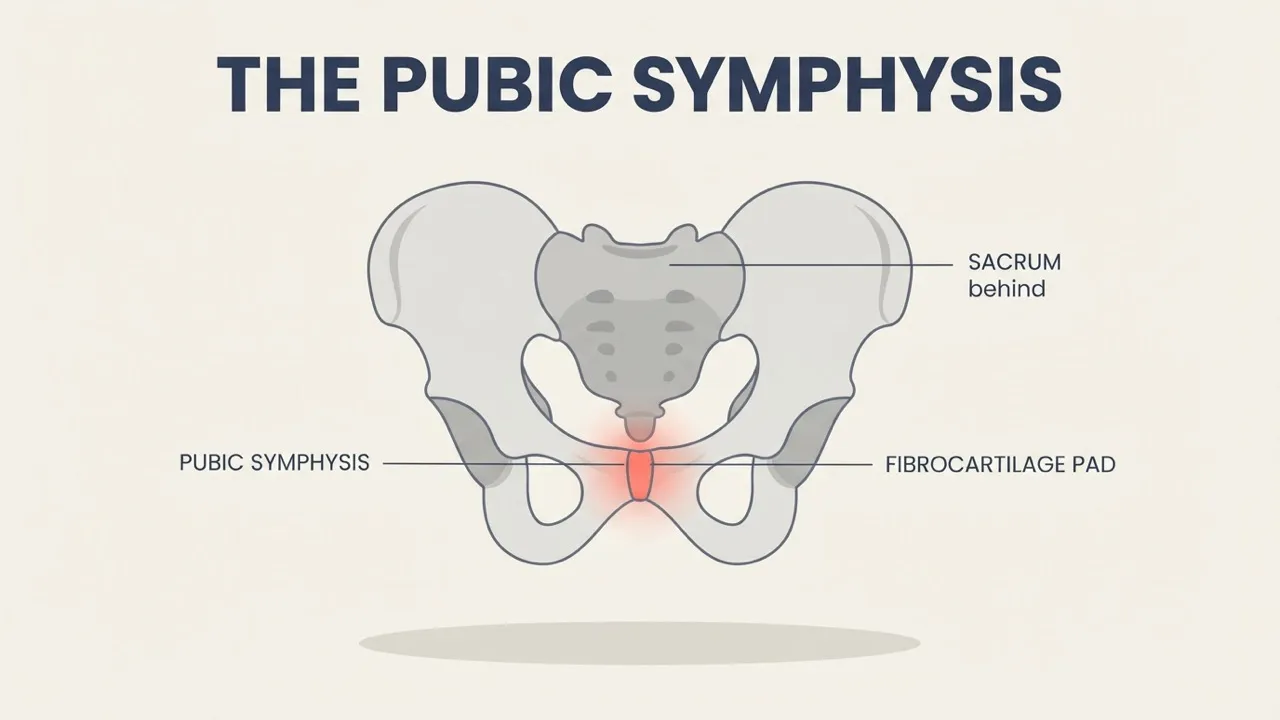
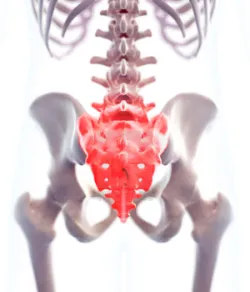
It shows up in two places. At the front, at the joint between your pubic bones, pain is sharpest when the two sides are loaded unevenly, so rolling in bed, getting out of a car and climbing stairs are the usual triggers. At the back, beside your tailbone, pain tends to ache into the lower back, buttock or thigh and bites when you stand on one leg while moving the other.
Either type can send pain somewhere that feels worse than it is. Aching in the buttock or thigh does not mean a nerve is trapped or a joint is damaged.
Why Pilates works for it
The honest reason is not stabilisation. Research has not supported the idea that the pelvis becomes unstable and needs locking down, and neither European guidelines nor the American Physical Therapy Association’s guidelines for this condition are built on that model.
What exercise does do is treat the pain. Three things happen when you keep moving.
You get stronger where the extra load is actually being carried. As your centre of gravity shifts forward, your hips, legs and upper body take more of the work. Strengthening them means your pelvis is not doing a job it was never designed to do alone. This is the main thing Pilates is useful for.
You get better at distributing load. Standing up from a chair, turning over in bed and getting out of a car all involve shifting weight unevenly across the pelvis. Learning to do those movements well, with the right muscles sharing the work, takes the edge off the sharp ones.
You stop guarding. Pain makes people move stiffly and tentatively, which usually makes the next movement hurt more. Working in a range that stays comfortable rebuilds confidence in your own body, and that has a real effect on how much pain you feel day to day.
How to go about it
Start easier than you think you need to. Find the movements that do not provoke the pain and build from there, rather than pushing into it and hoping. Pain that spikes for a long time afterwards means you have gone too far.
Work the hips and legs hard. Squats, step-ups, bridges and anything that loads the legs in a controlled way do more for pelvic girdle pain than a hundred careful pelvic tilts. You need to be strong enough to carry you through the third trimester.
Breathe and let your abdomen move. There is no need to brace or suck in. A held-in stomach makes it harder to move freely and does nothing useful.
Spread the load in daily life. Sit down to dress. Lead with the same leg up every stair. Turn in bed rather than lifting straight up. These small changes matter more than people expect, because they remove the sharpest moments from your day.
Short rest during a flare-up is fine. Staying off your feet for weeks is not. Deconditioning is the thing that turns a manageable pregnancy ache into a difficult one.
When to add something else
If pain is stopping you from getting started at all, hands-on physiotherapy plus a graded plan is usually what gets you moving again. For some women, a pelvic belt or compression shorts are worth having alongside exercise. They do not hold your bones in place, but they reduce the load on the movements that hurt and can be enough to keep you training rather than stopping.
If you want a class built for this specifically, our pregnancy Pilates sessions are graded so you are working within a range you can tolerate, and our physios can tailor the plan around where you actually are.
How long it lasts
In a large Norwegian study following more than 41,000 women who reported pelvic girdle pain at 30 weeks, 78% had recovered six months after giving birth. A further 18.5% had some pain left in one or two spots, and 3% still met the definition of pelvic girdle syndrome.
Most women get better on their own, which is reassuring. What treatment buys you is the months in between, and a faster route out for the smaller group who do not settle.
Put it into practice with our Letting Go of Pelvic Pain classes — physio-led, built around pregnancy, and streamed at home.
New to Pilates? Start with our Pilates Fundamentals for Pregnancy tutorials first, then work up.
Refs: Vleeming et al. (2008), European guidelines for the diagnosis and treatment of pelvic girdle pain, European Spine Journal; Clinton et al. (2016), Pelvic girdle pain in the antepartum population, clinical practice guidelines, American Physical Therapy Association; Dufour and Britnell (2018), Pregnancy-related pelvic girdle pain: embrace the evidence and move beyond biomechanics; Vølestad et al. (2012), The effect of emotional distress on persistent pelvic girdle pain after delivery, BJOG.