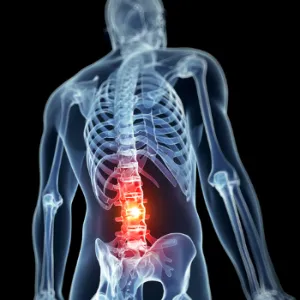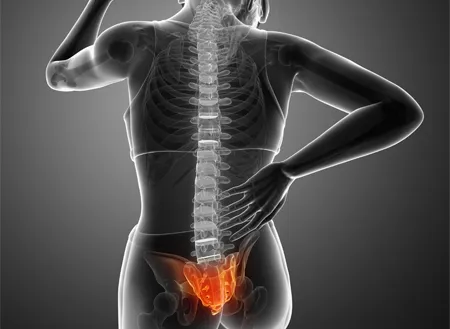
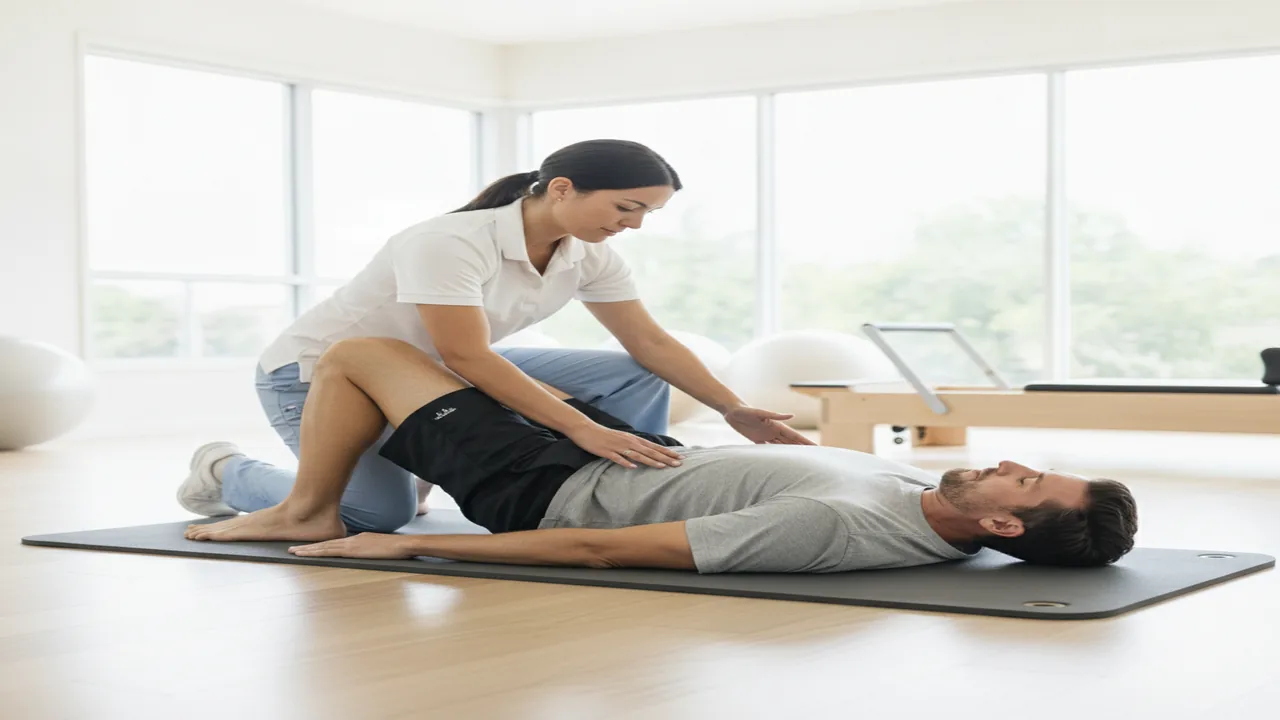
Pilates for back pain works: gentle, controlled movement, not rest, is the best-evidenced treatment for most persistent and nagging sore backs. Here’s why.
I’m Katrina Tarrant, principal physiotherapist at The Fix Program in Sydney CBD. I’ve spent my career helping people get their backs moving again — in the studio, and through the online pilates classes we built for people who can’t get in person. This guide covers why pilates works for back pain, four exercises you can start today, and how to tell when you need a physio rather than another self-help video.
Why pilates works for back pain
Your spine is built to move — and modern life gives it very little chance to
The spine loves two things: movement and support. Sitting gives it neither. When you spend hours in a chair, the small muscles that support each segment of your spine (the multifidus) effectively go to sleep, and the big outer muscles take over. The result is a back that feels stiff in the morning, tweaks when you bend to pick something up, and generally “grips” instead of supporting.
Pilates works because it does three things at once:
- It re-wakes the deep stabilisers. Slow, controlled movement forces the small muscles closest to the spine to do their job again — the ones that switch off with sitting and pain.
- It restores movement without strain. The spine loves gentle, repeated motion. Pilates gives it that in safe ranges, which is precisely what stiff, sore segments need.
- It builds the tolerance your day demands. Backs rarely hurt because one lift was “wrong”. They hurt because the load of your week exceeded what your back was conditioned for. Pilates is graded strength training for the muscles that carry that load.
The evidence backs this up — clinical guidelines consistently recommend exercise as first-line care for most persistent back pain, and pilates is one of the best-studied exercise forms for it. But the reason I prescribe it is simpler: in twenty years I’ve watched it work when pills and rest did not.
Four pilates exercises for back pain you can start today
Move gently and within a comfortable range. If any of these sharpens your pain, stop and check the “when to see a physio” section below.
1. Pelvic tilts — the foundation
Lie on your back, knees bent, feet flat. Gently flatten your lower back toward the floor by tilting your pelvis, then let it arch slightly away. Small, slow, rhythmic — like a clock hand sweeping between 12 and 6.
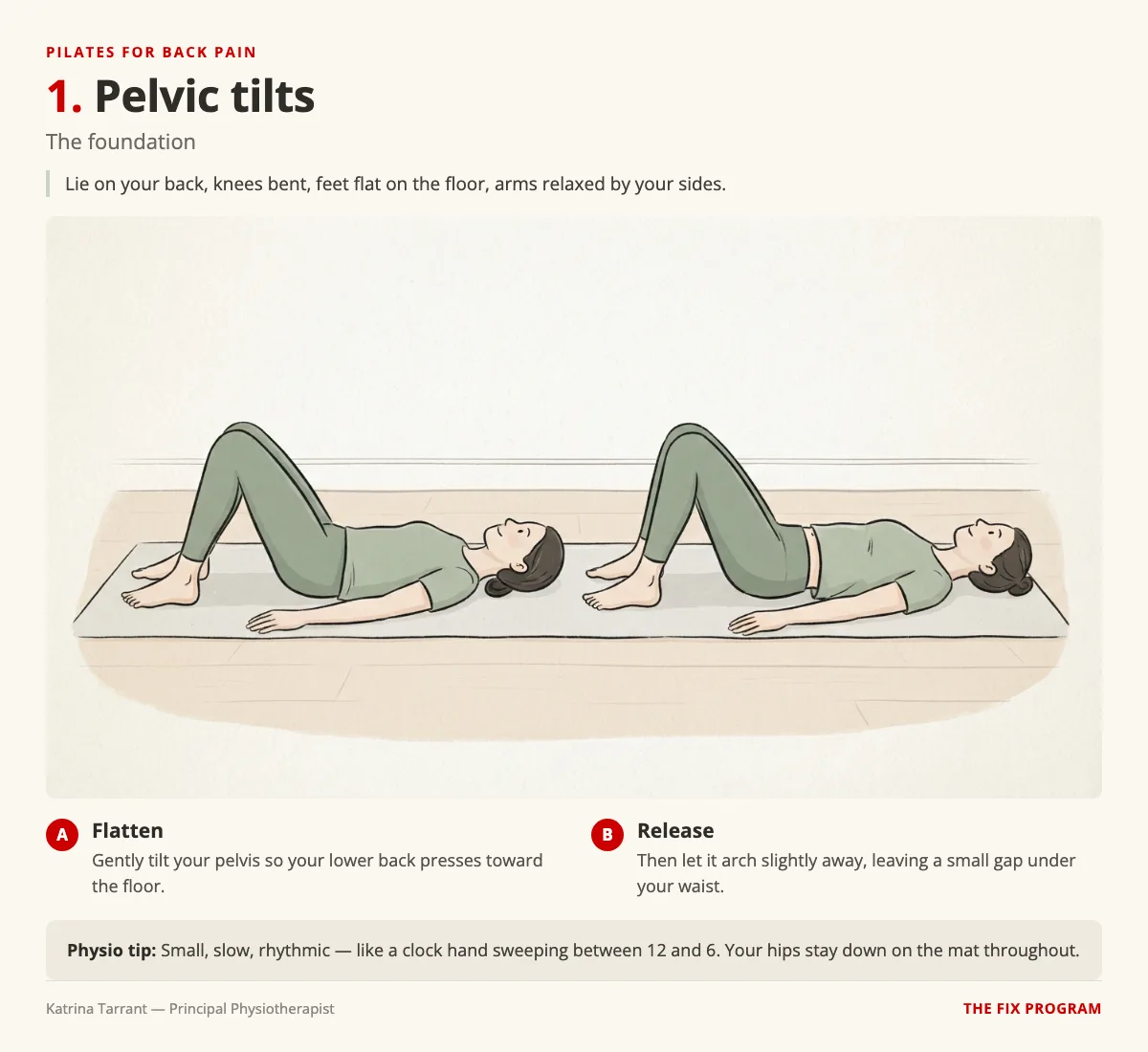
This tiny movement wakes up the deep stabilisers and lubricates the stiff segments of your lower back. It’s the first exercise I give almost every back-pain patient. Our pelvic bowl guide covers the positioning in detail.
2. Knee rolls — rotation for stiff segments
Still on your back, knees bent. Let both knees gently roll a little way to one side, then the other, keeping your shoulders heavy on the floor. Move only as far as feels easy.
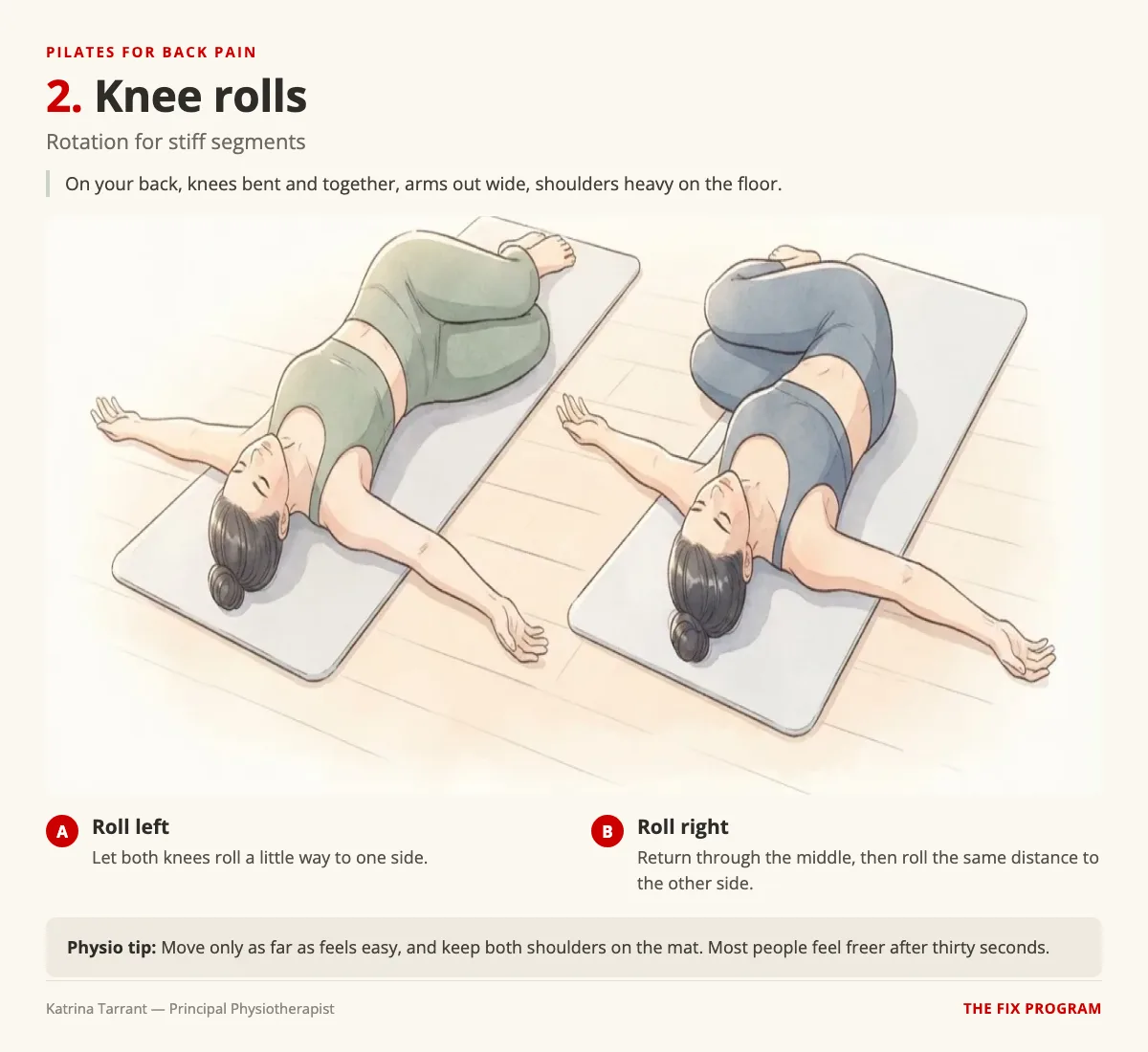
Rotation in lying takes load off the spine while restoring the twist your back has been avoiding. Most people are surprised how much freer they feel after thirty seconds of these.
3. Cat-cow — mobility for the whole spine
On your hands and knees, gently round your back toward the ceiling, then let it sway the other way, looking up softly. Move with your breath — round as you breathe out, lengthen as you breathe in.
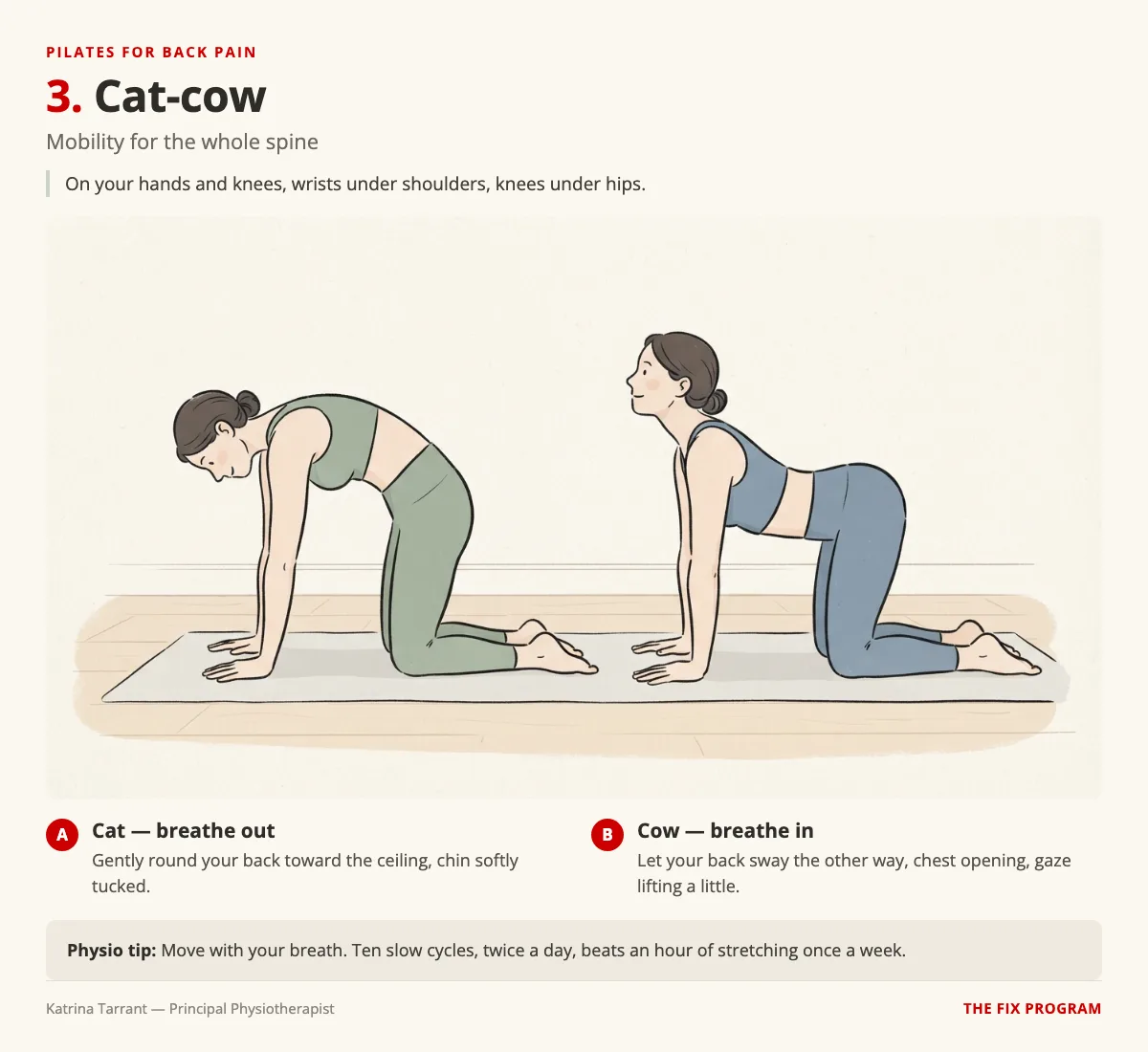
This takes each segment of the spine through a pain-free arc and teaches your back that movement is safe again. Ten slow cycles, twice a day, beats an hour of stretching once a week.
4. The dead bug — build real support
Lie on your back, knees bent at 90 degrees above your hips. Lower one foot toward the floor while keeping your lower back quiet on the mat, then return and swap sides. The slower, the better.
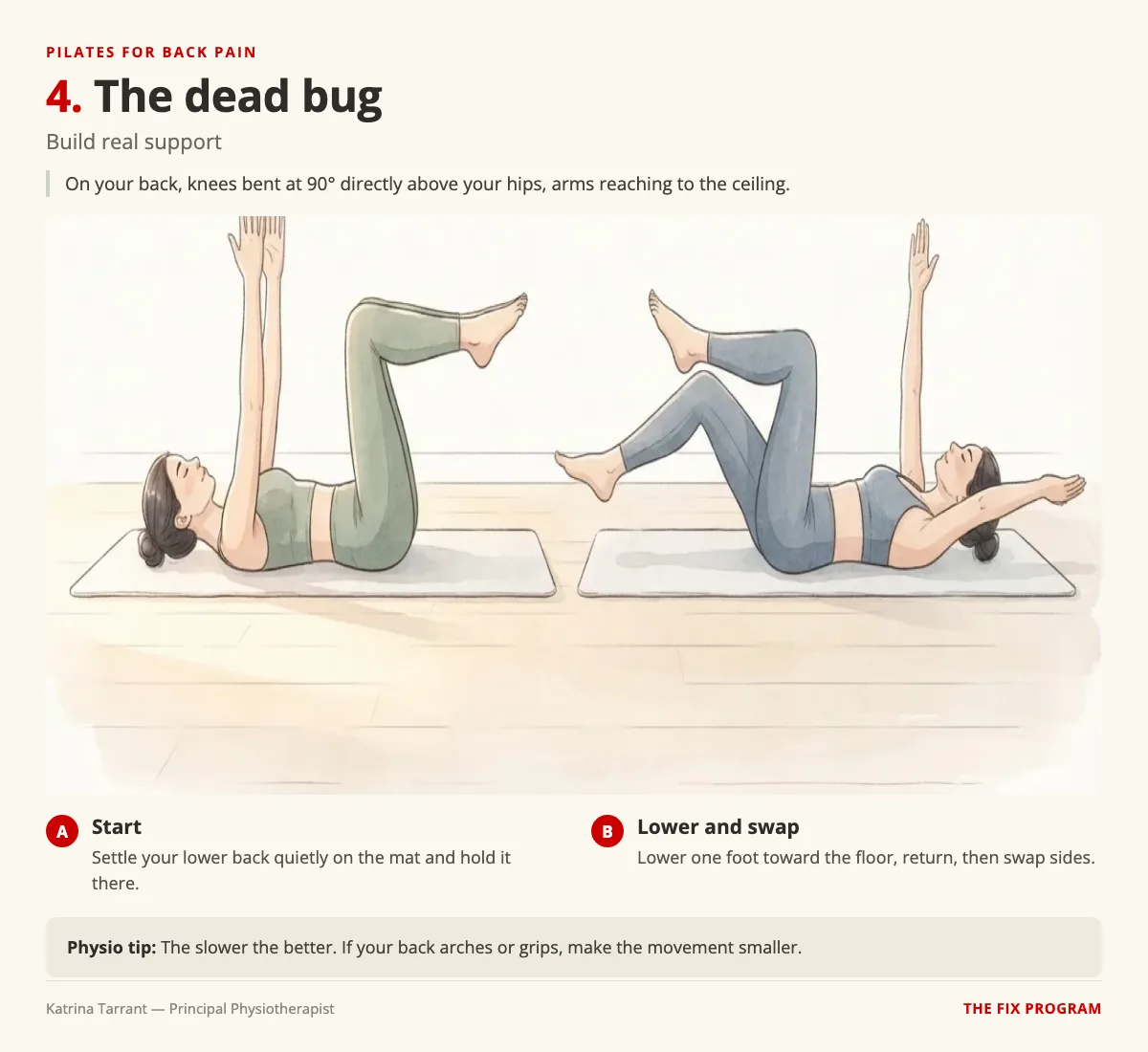
This is the first “strength” exercise in the progression: it challenges your deep core to hold your spine steady while your limbs move — which is exactly what your back does all day. If your back arches or grips, make the movement smaller.
Try the full guided class at home
These four are the foundation. In the full online pilates classes I’ve designed for back pain, I coach the complete progression — including the versions for people whose backs won’t tolerate floor work yet. Start with a free back-pain workout and see how your back feels after one guided session.
Home program or physio? How to tell the difference
Most back pain is what we call “simple” — uncomfortable, frightening, but not dangerous. That kind responds beautifully to the program above. But some patterns need a physio’s eyes before you exercise.
Suitable for home exercise:
- Dull, achy or gripping pain that eases as you move
- Pain that varies with position and activity — worse sitting, better walking
- No leg symptoms, or a small patch of tingling that comes and goes
Time to see a physio:
- Pain that travels below the knee, with pins and needles, numbness or weakness
- Pain that’s getting steadily worse despite a week of gentle movement
- Night pain that wakes you, or pain with fever or feeling generally unwell
- Any new back pain after significant trauma, or if you’re over 50 with new, different pain
- Pain that simply isn’t improving after 2–3 weeks of honest effort
The clinical shorthand: if the pain is stable or improving, keep moving. If it’s escalating or travelling, get assessed. And if you’re unsure which category you’re in — that’s precisely what an assessment is for.
Our physiotherapy team treats back pain every day at the George Street studio — see our back pain physiotherapy and lower back pain pages for what assessment and treatment involve. No referral is needed. If you’d rather start at home, the online pilates classes give you the same physio-designed programming wherever you are.
The physio’s bottom line
Back pain rarely needs a scan, a pill or a brace. It needs movement, graded load and a plan — and that’s true whether you’re in our Sydney CBD studio or following along at home. Start with the four exercises above, be consistent for two weeks, and let your back remember what it’s for.
Try the full class online or book an assessment — and if anything on the “see a physio” list matches your pattern, come in and let us take a look.