Katrina Tarrant Articles

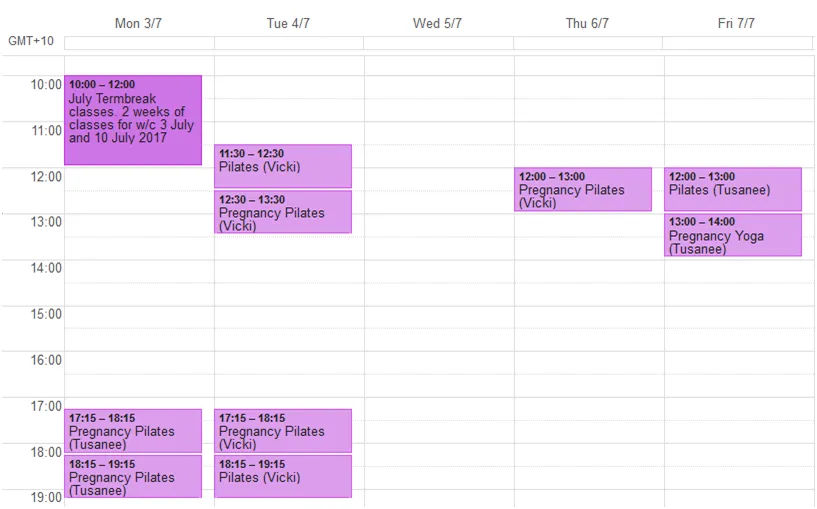
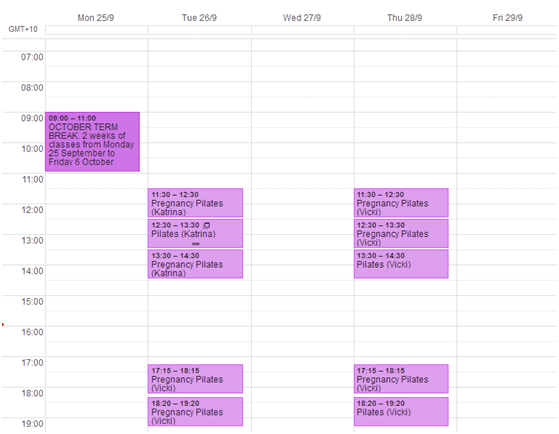
Draft July 2017 ‘term break’ timetable

Draft ‘July term break 2017’ timetable is subject to change.

These classes will run for 2 WEEKS in our CBD clinic. Classes are on offer only for our existing Fix Pilates clients. We have a mixed class scheduled for

  • combined beginners/intermediate/advanced classes (called PILATES), and
  • pregnancy-specific Pilates (called PREGNANCY PILATES).

Classes are $39 each and must be paid for upfront for the 2 classes, total $78. Receipts will be issued for these 2 weeks for use when claiming with your private health fund provider. Check yours for eligibility.

Read More

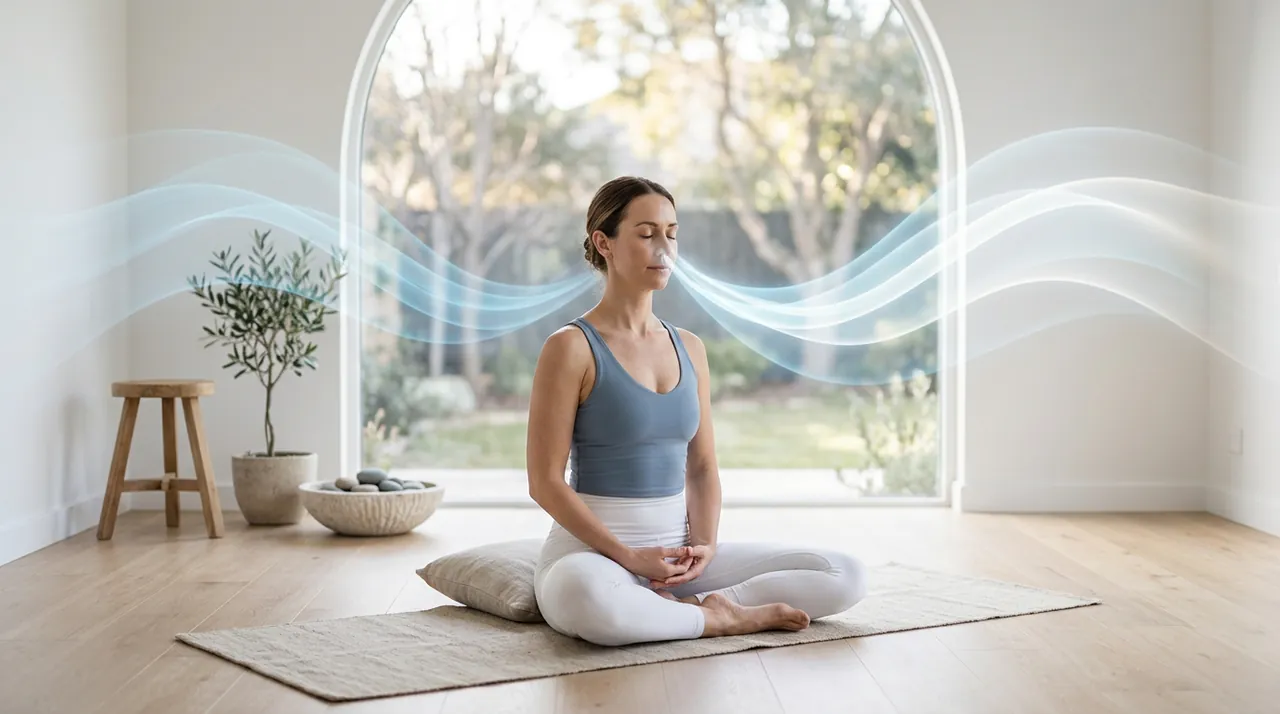
The 4-7-8 breathing technique

Calming the brain

We have previously posted on breathing and the importance of the diaphragm for better breath, ‘core strength’ and postural support. Breathing with your diaphragm makes it stronger like any muscle with increased use, and we encourage ‘deep and wide’ breathing patterns for this to take place.

This recent article in the Sydney Morning Herald is a great read and discusses the benefits of nasal breathing over mouth breathing. Researcher of Neurology in the US university NorthWestern, Christina Zelano says “When you inhale, you are in a sense synchronising brain oscillations across the limbic network”. She explains that when we are in a stress response or panic state, we breathe faster. We can all sense this ourselves when stressed. Through measuring brain activity levels at this time, it is thought that the brain is able to positively respond faster with nasal breathing than if we were to mouth breathe when in stress. It gets our brain deciding what to do faster. Could it be that our smell nerve (olfactory nerve) located in our nose is in close vicinity to the brain, sending messages faster along this nerve highway?

On the flip side for relaxation (and as well documented), a slower breath through the nose sends messages to the brain via the same olfactory nerve. The slower nerve stimulation of the slower breath sends messages to the brain of a steadying nature. This can bring about a relaxation and calming of the brain activity.

There are many relaxation and breath awareness exercises out there to try such as progressive or guided relaxation. Yoga offers another that we can add to the repertoire. It is called the 4-7-8 technique and can be easily practiced in any position. It aims to extend our bodies to breath beyond a normal breath capacity. It is thought in Yoga and Pilates practice that we are usually only breathing to 10% of our lung or breathing capacity! (and as a result, not ever utilising the olfactory nerve and its calming effects on our brain activity).

Simply breathe in for four seconds, hold the breath for seven seconds and exhale completely to a count of eight. It only takes a few seconds and it is suggested that you repeat this cycle up to four times. Do it at least twice a day. You cannot do it too frequently.

http://www.smh.com.au/lifestyle/health-and-wellbeing/wellbeing/how-breathing-affects-our-brain-20161215-gtbs2j

Read More

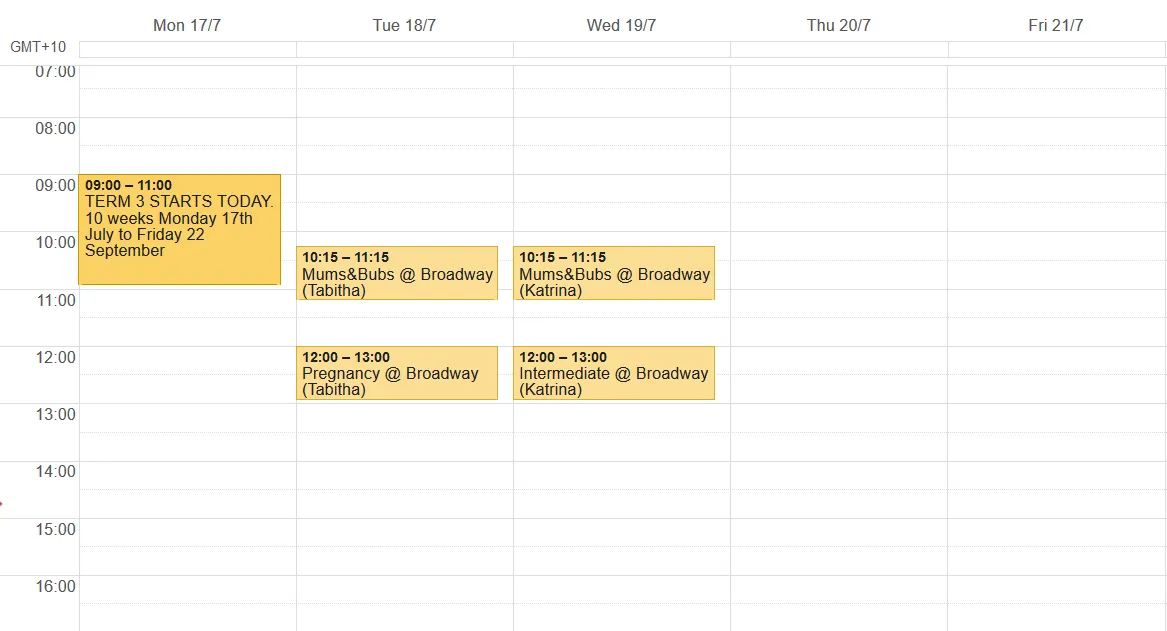
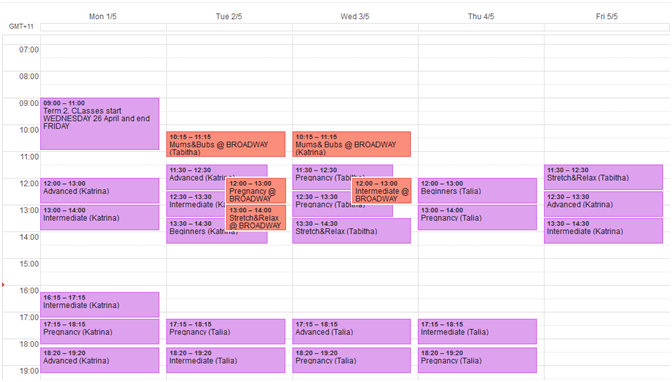
Term 2 2017 draft timetable

Pilates at our CBD and Broadway Clinics

Draft ‘term 2 2017’ timetable is subject to change. These classes will run for 10 WEEKS in our CBD and BROADWAY clinics. Classes will commence from Wednesday 26th April and end Friday 30th June 2017.

Please note that there will be no classes on Monday 24th and Tuesday 25th April due to ANZAC day holidays.

There is also a public holiday June 12th, affecting Monday classes.

Classes are recommended and scheduled for:

Read More

Draft Easter 2017 ‘Term break’ timetable

Draft ‘term 1 2017’ timetable is subject to change.

These classes will run for 2 WEEKS in our CBD clinic. Classes are on offer only for our existing Fix Pilates clients. We have a mixed class scheduled for our beginners/intermediate/advanced classes and also for pregnancy-specific Pilates.

Classes are $39 each and must be paid for upfront for the 2 classes.

Read More

Birth positions and control of your labour

Improving birth satisfaction and pelvic floor trauma risks

By Stacey Ly

Most women would admit that an impending labour brings about worry and concern. After all, pushing a baby out of such a small space in the pelvic region does really seem impossible! Research has shown that women who feel more in control during birth and delivery have a higher birth satisfaction. Giving a pregnant woman the chance to practice labour postures and to somewhat decrease the fears of labour can improve this control and outcomes come the big day that bub arrives.

Increasing control during labour consists of

  • Understanding the use of pain control during labour
  • Understanding the use of different positions to alleviate pain and assist labour and delivery
  • Understanding your anatomy and how to contract and relax the abdominal and pelvic floor muscles during labour. This is called pelvic floor co-ordination an can make a huge difference to those final stages of labour when it is time to push.

Women’s health physiotherapists specialise in exercise, pregnancy and the pelvic floor. This makes them the perfect health professional to give women this edge. They can provide pregnant mums-to-be an awareness, knowledge, practice an control all around labour and birthing.

Exercise for pelvic floor coordination for vaginal birth

Your pregnancy specialised physiotherapist can spend time training you, your pelvic floor and abdominals for pushing out baby in all birthing positions. This can get your ready for the big day. Your prior practice will not only reduce your fears and anxieties about the labour, but give you that control. You will know which labour positions work best for you (and not the midwife or doctor!), which positions allow for you to relax your pelvic floor muscles the best for baby’s passage through the vagina with reduced pelvic floor tearing. You will feel more in control in a situation which can very quickly turn the other way.

If you are unable to visit your women’s health physiotherapist for this labour training, here is an exercise you can try to master before labour to use when you are birthing and when it is time to push.

  • Breathe in and imagine the tummy bulging or swelling (imagine you are ballooning your tummy outwards)

  • As you do this, can you imagine you are also dropping your pelvic floor downwards? ( like the pebble we imagine dropping into a pond, or imagining we are about to start to wee)

  • Breathe out and now tighten the muscles under your belly button in towards your spine. It is essential that you keep bulging the pelvic floor down as you push down through your vaginal muscles and your anal muscles ( like you are trying to empty your bowel)

    • Try to focus on your vaginal entrance and anus opening
    • Think of that moment just before you wee
    • Also think of widening the sit bones or try not to clench your buttocks
    • Repeat 5-10 times every night
    • See if you can practice this in common birthing positions such as on all 4’s, on your back , in sitting, resting on a chair or leaning over a Swiss ball

    This practice of birth positioning will encourage you to be more mindful of the coordination of muscles working about in your pelvis. You need to focus on relaxing and not tightening the pelvic floor muscles as you activate your abdominals for the push.

    Along with birth positioning and pelvic floor coordination practice, there are other pre-labour things you can do to better the outcome of your birth.

    • Research has shown that perineal massage before and during labour can reduce the risk and severity of tearing during delivery.
    • Massage your perineum for 2-5 mins every night using oil such as coconut or olive oil.
    • Research also shows that the use of warm compresses on the perineum during pushing reduces 3rd and 4th degree tears. This can be simple as a warmed face washer applied directly to your vaginal and pelvic floor area.

    Birth preparation at The Fix Program

    At The Fix Program, we offer a birth preparation program with our specialised women’s health physiotherapist. This includes a one- on- one and very private appointment to practice labour postures with the use of a feedback machine on your pelvic floor region. (NO… it does not hurt a bit!!)

    • We will stick little electrodes on your pelvic floor to use an EMG, which is a machine that picks up muscular activity. On the external pelvic floor, you will learn how to co-ordinate your pelvic floor muscles during birth ( when we want them as relaxed or ‘dropped’ as possible)

      • This allows you to “hear” when you are relaxing (or contracting) your pelvic floor.
      • It can teach you when to relax and contract during pushing in labour.
    • Practice of birth positions with the EMG- in sitting, standing, squatting, kneeling, on a Swiss ball so you learn to relax and co-ordinate your pelvic floor in these positions

    • Perineal massage techniques to the pelvic floor to reduce risk of tearing

    • Breathing techniques to help with relaxation

    Contact us for an appointment of if you have any questions

Read More

The 5 ways Pilates can get you swimming better

Prevent overuse injuries and enjoy your swimming more with these tips

By Talia Kruger


With all the hot weather we have been having recently, most of us have been flocking to the beaches and pools to keep cool. We’ve all heard about the benefits of swimming – not only is it a great aerobic workout, it also reduces the impact through our joints and increases muscle strength and tone.

Swimming requires optimal body alignment and core control to effectively move through the water. However, most of a swimmer’s time training in the water focuses on working the global muscle system. This means the stabilising inner core muscles often get overlooked. An imbalance between these two systems leads to poor alignment, causing certain muscles to over-work. This can add precious seconds to your time or gradually lead to overuse injuries like we treat here at the clinic.

This is where Pilates can help get you swimming like Ian Thorpe!

Pilates focuses on improving strength and optimising the recruitment of the deep core muscles that are vital to your swimming. This includes the pelvic floor muscles, the deep abdominals (transverus abdominus), and multifidus. It also targets body awareness and good posture which will allow you to achieve correct positioning and technique in the pool.

Here are my top 5 Pilates tips for swimmers.

  1. Stronger Core: Pilates exercises are designed to improve your core control by linking your pelvis, trunk and shoulder girdle. We can teach you how to correctly activate this deep core system to achieve optimal balance and alignment. When these muscles are underactive you may find your pelvis dropping during your breaststroke or freestyle – causing drag and slowing you down.
  2. Breathing Pattern and Control: A key principle of Pilates is learning to control your breathing. Using a controlled exhale breathe can aid the correct recruitment of your deep core muscles - improving the power of your stroke. It will allow you to concentrate on your body alignment and stop you from thinking about how many laps you have left to go! Also, the benefit of a long mindful exhale will get you better depth of breath and oxygen delivery on those inhales too.
  3. Greater Joint Flexibility: Pilates also focuses on improving our spinal mobility and lengthening our muscles. Many of the exercises at The Fix Program focus on working through a variety of different movements and positions, challenging the flexibility and stability of the joints. These benefits will change how you feel in the water. For example, if you have a stiff thoracic spine (upper back) and lack rotation or extension, you will have a reduced shoulder reach which can cause overloading of the shoulder joint or neck when it comes to the pool.
  4. Low Impact: Sometimes we need to give our bodies a rest from high-impact exercise such as running, dancing or sport. Maybe you have noticed that you don’t move as well as you used to and want to protect your joints from osteoarthritis? Perhaps you are recovering from an injury or are currently in pain? Whatever the reason, low-impact exercise is a great option to get your heart rate up and improve your fitness without your joints feeling the pressure! Pilates is a great ‘cross training day’ to mix your exercise up a little through the week.
  5. Scapular Stability: Research has found that almost 90% of the forward propulsion during swimming comes from the upper extremities. Doing Pilates exercises targeted at scapular stability will not only stabilise the shoulder and prevent overuse of the rotator tendons of the shoulder, but it will improve our muscles ability to “fire” correctly throughout the dynamic of swimming. An added bonus is these exercises also help to support our neck and head, so you will notice the benefit when sitting at your desk as well.

There are many benefits you will get to enjoy both in body and mind after adding Pilates to your weekly routine. Perhaps while reading this you were thinking that your swimming stroke needs improvement, or is even causing and pains?

So what are you waiting for? Dive into a pool (and a Pilates class) today!

Read More

Gap-free initial physio consultation

**A special offer for all Fix Program members and their families. Save up to $100 on physiotherapy.
**

Call us now on 9264 0077 to book in your initial assessment and treatment. Why not start off the year without your painful neck or back, or injured shoulder or knee?  Are you pregnant and suffering from pregnancy related rib, back or pelvic girdle pain? You are also eligible for this offer.

We can help you to take control of your injury and your body and return to what you like doing without pain and discomfort.

We are offering for the first time, a gap free 30 minute consultation and treatment to get you started. This half hour usually costs $130, but private health fund members will not need to pay the gap.

This initial consultation will include:

  • Complete history and assessment of the condition
  • Manual therapy treatment to problem areas
  • Action plan and exercises to help address the issue for you at the gym or home.

No private cover? A  nominal fee of $49 will be charged for the same 30 minute initial consultation, saving you $81. 

Call us now on 9264 0077 to book your initial consultation. Mention ‘York Street’ at the time of booking for this offer.

*Valid for all new physiotherapy services only. (those attending The Fix Program Pilates classes are eligible to exercise this special offer for physiotherapy services.  Valid for existing Fix Program clients and their friends. Valid for appointments only at the Fix Program CBD York Street clinic. The initial consultation for this offer is 30 minutes only. Not valid for our specialised women’s’ health/pelvic floor physiotherapy services or Pilates group assessments. For those without private health insurance, a fee of $49 will be charged for the 30 minute initial consultation. Valid until 31/3/17.

Read More

Gap-free Initial physio consultation for Fernwood members

A special offer for all Broadway Fernwood gym members and their families and friends. Save up to $100 on physiotherapy. 

Call us now on 8005 2379 to book in your initial assessment and treatment. Why not start off the year without your painful neck or back, or injured shoulder or knee? The Fix Program is a women specific physio clinic with rooms within the Broadway Fernwood gym!

We can help you to take control of your injury and your body and return to what you like doing without pain and discomfort.

We are offering for the first time, a gap free 30 minute consultation and treatment to get you started. This half hour usually costs $130, but private health fund members will not need to pay the gap.

This initial consultation will include:

  • Complete history and assessment of the condition
  • Manual therapy treatment to problem areas
  • Action plan and exercises to help address the issue for you at the gym or home.

Are you pregnant?   Feeling pregnancy related rib, back or pelvic girdle pain? You are also eligible for this offer.

No private health cover? You can also take part in this offer, by paying a nominal fee of $49 for your initial physiotherapy consultation. This is a saving of $81.

Call us now on 8005 2379 to book your initial consultation. Mention ‘Broadway’ at the time of booking for this offer.

*Valid for new patients only. Valid for Fernwood members and their friends. Valid for appointments only at the Fix Program Broadway clinic. The initial consultation for this offer is 30 minutes only. Not valid for our specialised women’s’ health/pelvic floor physiotherapy or pilates assessement services. For those without private health insurance, a fee of $49 will be charged for the 30 minute initial consultation. Valid until 31/3/17.

Read More

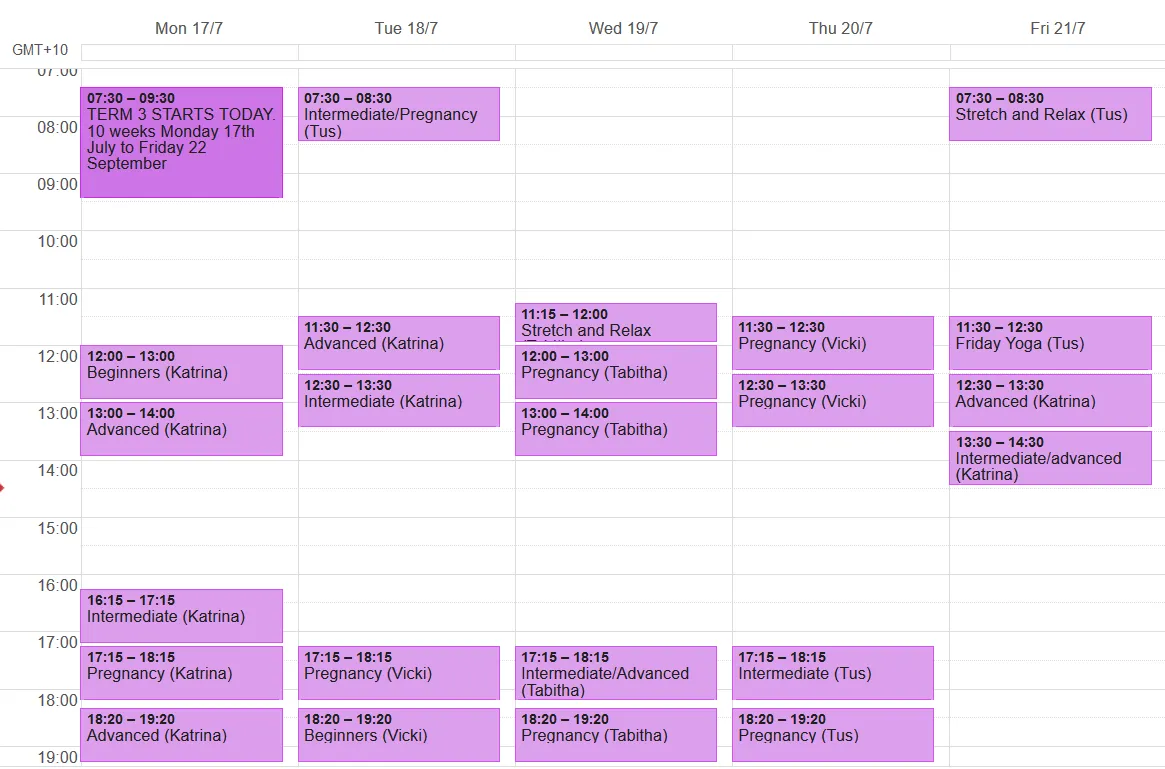
Draft Term 1 2017 Pilates Timetable

Pilates at our CBD and Broadway Clinics

Draft ‘term 1 2017’ timetable is subject to change. These classes will run for 10 WEEKS in our CBD and BROADWAY clinics. Classes end for this term on Friday 7th April. 2017.

Classes are recommended and scheduled for:

Read More

Draft Term 1 2017 Pilates timetable

Pilates at our CBD and Broadway Clinics

Draft ‘term 1 2017’ timetable is subject to change. These classes will run for 10 WEEKS in our CBD and BROADWAY clinics. Classes end for this term on Friday 7th April. 2017.

Classes are recommended and scheduled for:

Read More

Showing 10 of 290 articles by Katrina Tarrant

Fix News