Pilates for beginners works best when you start with the fundamentals: neutral spine, deep postural muscles, and simple physio-led progressions at home.
I’m Katrina Tarrant, principal physiotherapist at The Fix Program in Sydney CBD. I’ve spent my career teaching people to move well — first in the studio, and through the online pilates classes we built for people who can’t get in person. This guide covers what the pilates fundamentals actually are, the two skills every class is built on, three mistakes almost every beginner makes, and three exercises you can start this week.
What “pilates fundamentals” actually means
It’s not a workout level — it’s two skills that everything else sits on
Walk into any pilates class, studio or online, and you’ll hear the teacher cue the same two things: find your neutral spine, and switch on your deep postural muscles. That’s not ritual. Those two skills are the difference between an exercise that builds your body and one that strains it.
When physios talk about the “fundamentals”, we mean exactly this: the posture your spine works best in, and the deep muscles that hold it there while you move. Get them right and every class you ever take — beginner to advanced — works better. Skip them and you’ll spend years doing the movements without getting what the movements are for.
(Not sure where pilates even came from? A brief history of pilates tells that story in full.)
Skill 1: finding your neutral spine
Your spine has a position where it is strongest — learn to find it lying down first
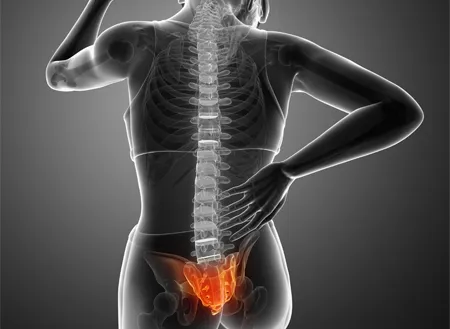
Your spine isn’t straight, and it isn’t meant to be. It has natural curves, and it moves best — and protects itself best — from the middle of its range. We call that position neutral spine: not flattened, not arched, not tucked. Level.
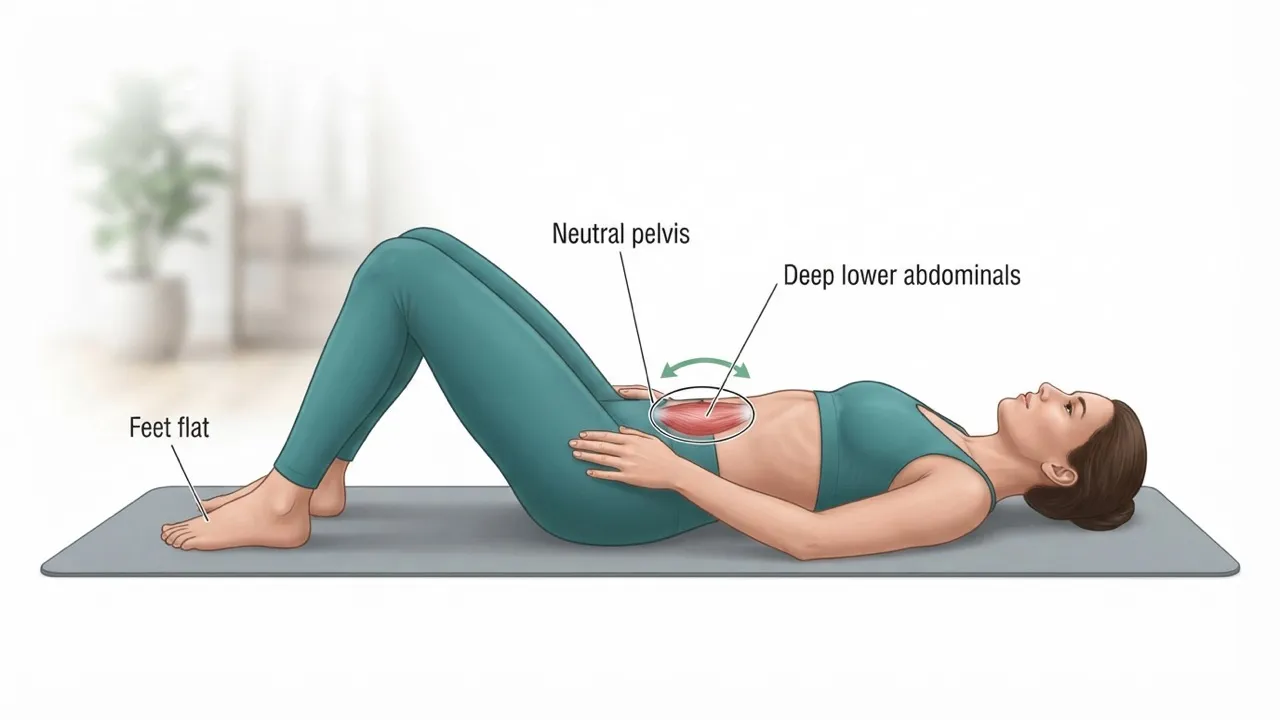
The easiest place to learn it is lying on your back with your knees bent:
- Place your fingertips on your two hip bones at the front of the pelvis, with your thumbs meeting just below your navel. You’ve made a “bowl” out of your pelvis.
- Gently rock the bowl: tip it toward your ribs, then let it tip away.
- Find the middle — where the two hip bones and the pubic bone sit level, like a bowl of water that would neither spill toward you nor away. That’s neutral.
Sitting is where most of us lose it. If you spend your day rolled back onto your tailbone, your pelvis is permanently tipped — and neutral will feel strange at first, even though it’s the position your spine wants. We’ve written about this in detail in actively sitting and untucking your tailbone, and the same “level bowl” model applies in simple postural awareness: the pelvic bowl.
Skill 2: the deep postural muscles — what your “core” really is
Your core isn’t your abs. It’s a deep cylinder that holds your neutral spine for you
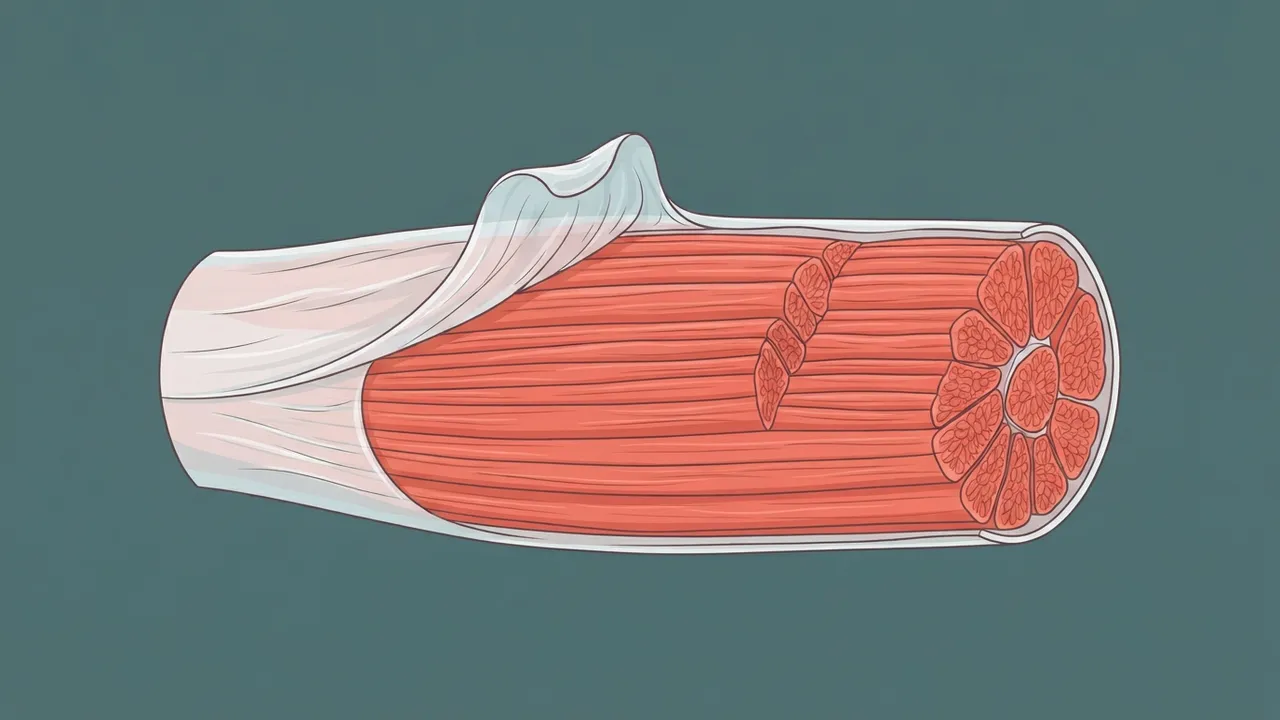
“Core” has become shorthand for a six-pack, but the muscles that matter for posture are much deeper and much less visible. Think of a cylinder: the diaphragm as the lid, the pelvic floor as the base, the deep abdominal layer (transversus abdominis) wrapping the front like a corset, and the small spinal muscles (multifidus) supporting each segment at the back.
These muscles work at low levels for long periods — they’re endurance postural equipment, not power lifters. When they do their job, your spine holds its neutral position with almost no conscious effort, and the big outer muscles are free to do the actual moving.
Switching them on is lighter than you think:
- Breathe out, and gently draw the lower belly toward the spine — about 20 to 30 percent of your maximum effort. A light switch-on, not a brace.
- Feel gentle tension come alive under your fingertips at the lower abdomen while your breath stays easy.
- Hold that while you breathe normally. If your face goes red, you’re trying too hard.
If this model of the core is new to you, core stability or postural control unpacks it further, and what are global muscles explains the difference between these deep local muscles and the big movers on top.
The three mistakes almost every beginner makes
Fix these and everything else gets easier
1. Tucking the tailbone. Cueing yourself to “tuck under” or “squeeze down” flips the pelvis backwards, closes the base of the spine and turns off exactly the deep muscles you’re trying to train. Neutral means level — untucked. The tailbone untuck guide shows the difference.
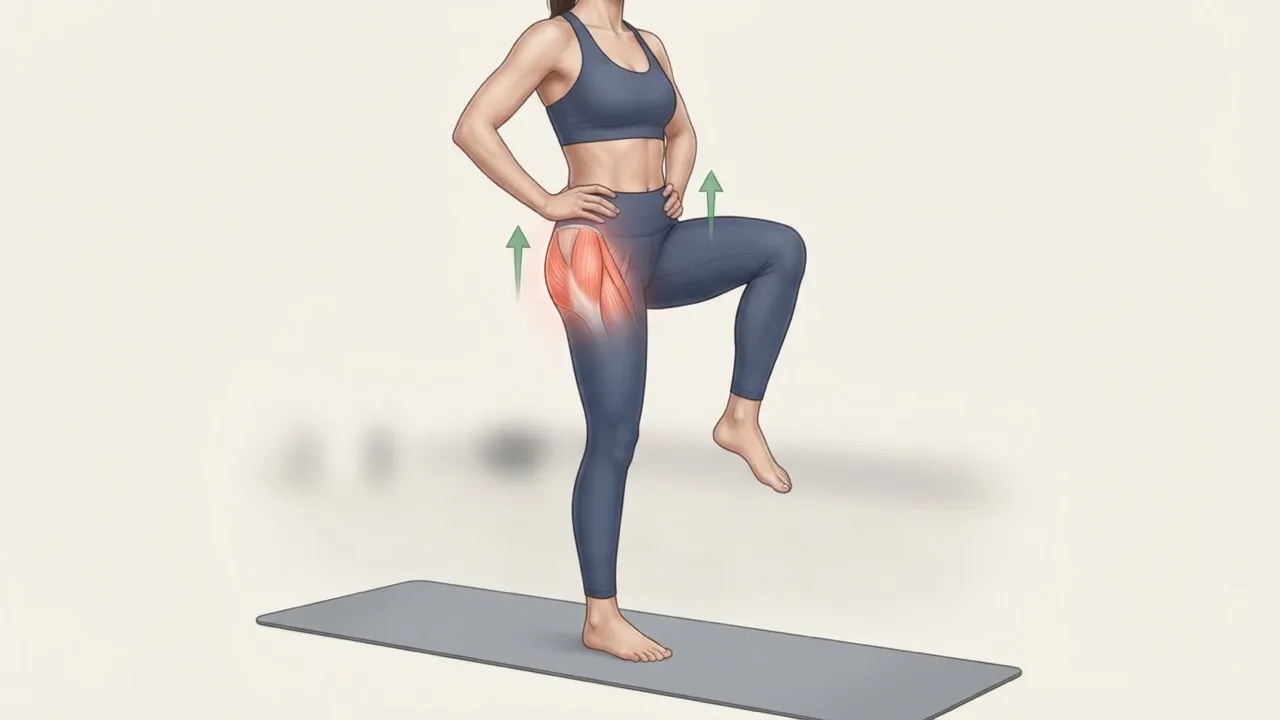
2. Butt gripping. Clenching the glutes constantly is the most common substitution pattern we see in new clients. It feels like strength but it’s rigidity: it tips the pelvis, restricts your hip movement and steals the job from your deep core. If your cheeks are clenched right now reading this — that’s the habit. Are you a butt gripper?
3. Holding the breath. Breath is the lid of the core cylinder. When you hold it, pressure builds and the whole system stiffens instead of supporting. In pilates, breathing out accompanies the effort — and easy, rhythmic breathing is a skill worth rehearsing on its own. Start with the diaphragm, the thorax and our posture.
Three exercises to start with this week
Slow, small and boring is exactly right
Once you can find neutral and breathe in it, add slow movement. Three exercises cover the basic patterns:
1. Heel slides. Lying on your back in neutral, breathe out, gently switch on the deep muscles, and slide one heel along the floor until the leg is long. Breathe in to float it back. Keep the bowl of the pelvis perfectly level — no tipping — as the leg moves. Ten slow slides each side. Imagine your feet are stuck in chewing gum as they move — the sticky feet cue keeps the motion slow enough for the deep muscles to hold the pelvis steady.
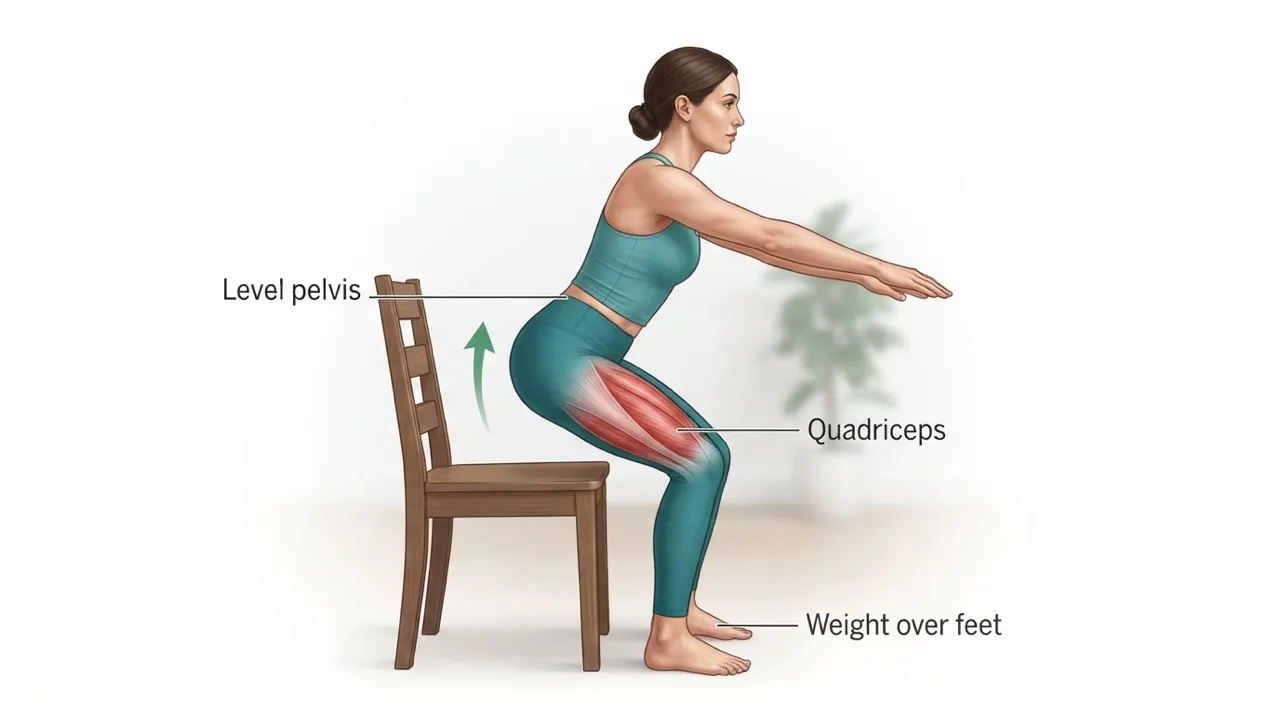
2. Sit to stand. Sit forward on a firm chair, untucked. Breathe out, switch on lightly, lean forward over your feet and stand, then sit back down with the same control. The pelvis stays level the whole way. Eight to ten repetitions. We have a whole sit-to-stand walkthrough.
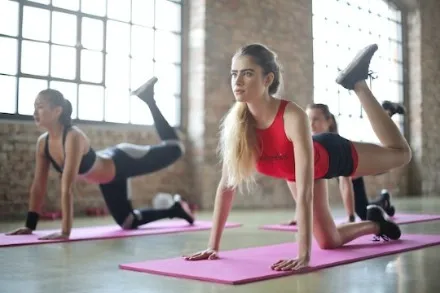
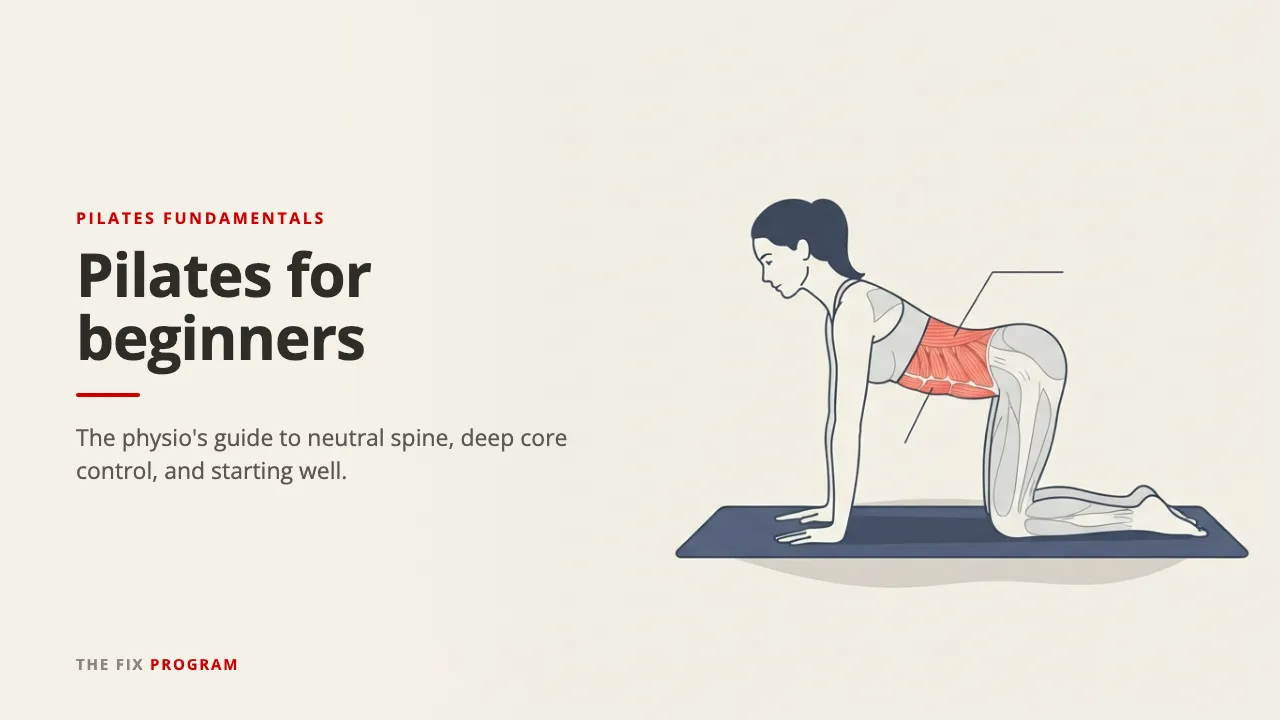
3. Four-point rock. On hands and knees, find neutral (imagine balancing a glass of water on your low back), switch on lightly, and gently rock back toward your heels an inch or two and return. The spine moves as one piece. Eight gentle rocks.
A note on safety: these should feel muscular, effortful and calm — never painful. Pinching, gripping or pain means stop and shorten the movement. If you’re recovering from an injury, pregnant (exercise in pregnancy is well supported, but get clearance first), or managing a health condition, have a physiotherapist set your starting point before you begin.
The beginner ladder: how to progress
Each level rehearses the control the next one demands
Pilates programs are built as a ladder for a reason. In physio terms, every level is training the control that the next level assumes you already have:
- Fundamentals — learn neutral spine and the deep postural muscles properly, in slow tutorial form. This is the step almost everyone skips, and it’s the one that makes the rest work.
- Beginners program — apply the two skills to real pilates exercises at a learnable pace.
- Intermediate and advanced — load, range and complexity grow on top of the same two skills.
Skipping straight to intermediate classes doesn’t make you advanced — it makes you someone rehearsing compensations. The deep muscles only learn their job when the movement is slow enough for them to manage it.
That’s why we start every online beginner the same way, with our Pilates Fundamentals tutorials — two short classes where I walk you through finding neutral and switching on the deep postural muscles, the physio way. From there the ladder continues: beginners, then intermediate, then advanced, all with a 7-day free trial.
Where to start: at home or in the studio
Both doors lead to the same fundamentals
If you’d rather learn in person, our pilates classes in Sydney CBD start every new client with exactly these fundamentals — assessed, cued and corrected in real time by a physiotherapist. Equipment-based clinical rehab classes are the natural next step if you’re returning from injury.
If you’d rather start at home — most beginners do — start with the Pilates Fundamentals tutorials, then step up the ladder at your own pace. Learn the two skills properly and every class you ever take, here or anywhere, will work better for it.